Dreaming of sea: what does this dream mean?

In short
The sea is one of the most potent and recurring symbols in dream life. Vast, borderless, and simultaneously nurturing and destructive, it appears in the dreams of people across cultures and centuries. Whether the dreamer stands safely on shore, swims freely in open water, or is swallowed by a breaking wave, the sea carries an emotional charge that psychoanalysts, folklorists, and spiritual traditions have all sought to decode. Its meanings are rarely simple: the sea embodies the unconscious mind, the passage of life and death, maternal origin, and the terrifying sublime — often all at once.
What are the interpretations of this dream?
Psychoanalytic interpretation (Freud, Jung)
According to Sigmund Freud
For Freud, large bodies of water in dreams — including the sea — consistently represented the unconscious itself, and more specifically the primal waters of birth and the maternal womb. In 'The Interpretation of Dreams' (1900), Freud associated oceanic immersion with a return to the pre-ego state, a wish to dissolve back into undifferentiated union with the mother. He linked calm seas to erotic longing and fulfillment, while turbulent or flooding seas often signaled anxiety about being overwhelmed by repressed libidinal energy. Drowning in Freudian analysis is rarely literal; it maps the ego's fear of being submerged by unconscious drives that have grown too powerful to contain.
According to Carl Gustav Jung
Carl Jung placed the sea at the very center of his archetypal symbolism. In 'The Archetypes and the Collective Unconscious' (1959), he described the sea as the archetypal image of the collective unconscious — the vast, dark reservoir of inherited psychic material that underlies individual experience. To dream of the sea is to stand at the threshold of the Self. A calm sea may indicate readiness for inner exploration; a stormy sea reflects the turbulence of the individuation process, the struggle to integrate shadow material. Jung also associated the sea with the Great Mother archetype in her dual aspect: the nourishing, life-giving ocean and the devouring, engulfing abyss. Creatures emerging from the sea — serpents, leviathans, strange fish — represent contents of the unconscious pressing toward consciousness.
Traditional and oneirocritic interpretation
In the oldest English and European dream-interpretation manuals, the sea carried heavily fate-laden readings. The tradition of onirocriticism reaching back through the Medieval and Renaissance periods — informed by the classical text of Artemidorus — treated the sea as a mirror of life's fortune. A placid sea promised safe passage and favorable outcomes in business or travel; a stormy sea warned of hardship, conflict, and uncertain times ahead. To dream of drowning was almost universally an ill omen, sometimes interpreted as a literal warning of danger or a metaphor for financial ruin. Conversely, emerging safely from rough waters was a sign of resilience and ultimate triumph over adversity. These interpretations were practical and moralistic: the sea told the dreamer what to prepare for, not merely what they felt.
According to cultural and religious traditions
Tradition Christian and Biblical tradition
In the Hebrew Bible and the New Testament, the sea is a place of divine power and human vulnerability. God divides the Red Sea in Exodus; Christ walks on the Sea of Galilee and calms the storm. In Revelation, the sea yields up its dead at the Last Judgment and then vanishes entirely in the new creation ('there was no more sea'). To dream of the sea in a Christian interpretive framework often evokes themes of faith tested by chaos, divine protection from overwhelming forces, and the promise of ultimate peace beyond mortal struggle.
Tradition Celtic and Norse maritime traditions
For the seafaring cultures of Britain, Ireland, and Scandinavia, the sea was not a metaphor but a lived reality imbued with spirit. The Celtic Otherworld — Tír na nÓg, the Land of the Young — lay across or beneath the western sea. To dream of sailing westward toward an unknown shore was associated with death, but not fearfully: it signaled passage to a blessed realm. Norse tradition placed the sea-god Njörðr as a figure of abundance and safe travel, while the world-serpent Jörmungandr coiled beneath the ocean's depths, embodying the terrifying forces that ring all of existence.
Tradition Jungian-influenced modern Anglophone dreamwork
Contemporary English-language dream authors such as Ann Faraday ('The Dream Game', 1974) and Ernest Hartmann ('Dreams and Nightmares', 1995) approached the sea as a living emotional metaphor. Hartmann's research on nightmare imagery found the sea — especially tidal waves and floods — among the most common threatening images following trauma and stress, reflecting what he termed the 'central image' of dreams: a condensed emotional picture of the dreamer's psychological state. The sea in this framework is a direct readout of emotional intensity, not a fixed symbol with a predetermined meaning.
Dreaming of sea: what does the context mean?
| Dream situation | Interpretation |
|---|---|
| Swimming freely in a calm, clear sea | A strongly positive sign of psychological ease and confidence. The dreamer feels at home in their emotional life and unconscious depths. Jung would read this as successful engagement with the self; Hartmann would note it as a marker of low emotional threat and openness to experience. |
| Standing on shore watching the sea from a distance | Suggests a relationship with the unconscious that is observational rather than participatory. The dreamer is aware of their emotional depths but maintains a boundary. This may signal readiness for deeper self-exploration, or a protective hesitance — particularly relevant when life circumstances feel overwhelming. |
| Being engulfed by a tidal wave or dragged under by a current | Among the most common anxiety-related sea dreams. Hartmann's research links this image directly to periods of acute stress, grief, or trauma. The dreamer's ego feels helpless against forces larger than itself — work pressure, grief, relationship breakdown, or unprocessed fear. Freudian analysis reads it as the ego under siege by repressed material. |
| Sailing or navigating the sea by boat | The vessel represents the conscious self moving through the unconscious. A well-steered boat on manageable seas reflects the capacity to navigate emotional complexity with skill and intention. A rudderless or sinking ship raises questions about the dreamer's sense of direction and agency in waking life. |
| The sea at night or under a stormy sky | Darkness amplifies the sea's association with mystery and the unknown. Dreams of a black, churning sea often coincide with periods of existential uncertainty — questions of purpose, loss, or mortality. Calvin S. Hall's studies ('The Meaning of Dreams', 1953) noted that nighttime water settings correlated with feelings of isolation and unresolved emotional conflict. |
What does sea symbolize in dreams?
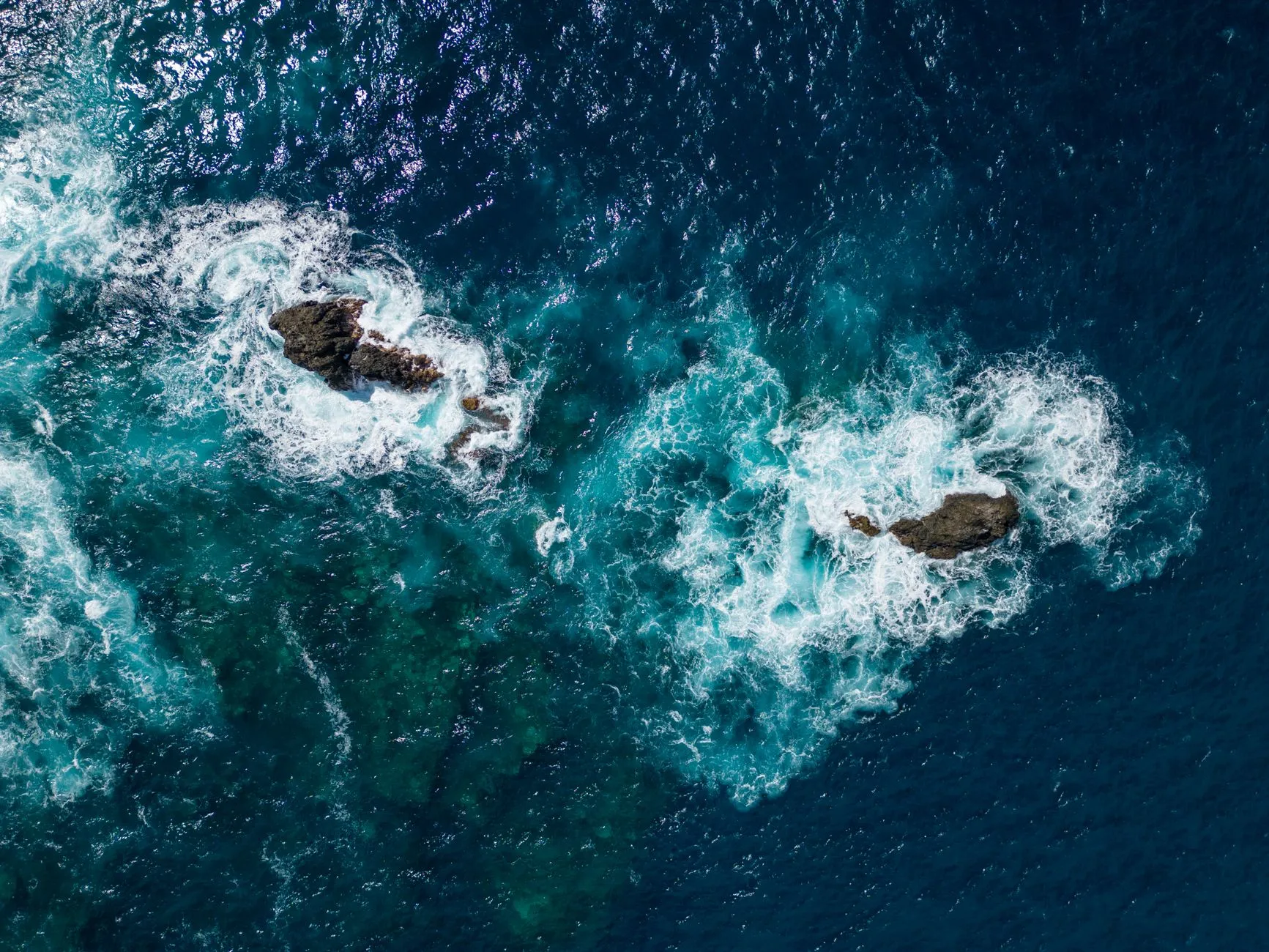
The sea's symbolic power in dreams rests on its physical properties: boundlessness, depth, opacity, and the capacity to sustain or destroy life. It is simultaneously the origin of all terrestrial life and one of the most hostile environments the human body can enter. This paradox makes it an ideal container for emotional ambivalence. Unlike a river (which has direction and purpose) or a lake (which is enclosed), the sea has no clear boundary and no single current — it mirrors an emotional world that cannot be reduced to simple narrative. In English literary tradition, from Shakespeare's Tempest to Conrad's Heart of Darkness, the sea has served as the external landscape of internal extremity. Dreams draw on this inherited symbolic vocabulary even when dreamers have no conscious awareness of it.
Frequently asked questions
- What does it mean to dream of a tidal wave coming toward me?
- A tidal wave or tsunami is among the most emotionally loaded sea images in dream research. Ernest Hartmann's work on nightmare imagery identified it as a 'central image' closely linked to emotional overwhelm — typically appearing during or after periods of acute stress, trauma, or major life upheaval. The dreamer is not in danger of literal flooding; the image reflects a felt sense that something in waking life has grown too large to manage. Identifying the source of that pressure is usually more productive than searching for a fixed symbolic meaning.
- Is dreaming of the sea a good or bad omen?
- Traditional dream manuals treated the sea's meaning as contingent on its state and the dreamer's experience within it: a calm sea promised good fortune; a stormy one warned of hardship. Modern dream psychology takes a more nuanced position. The sea is an ambivalent symbol — it can reflect psychological health (freedom, openness, confidence) just as readily as anxiety or loss. The emotional tone the dreamer wakes with, and the context of the dream, matter far more than any fixed rule.
- Why do I keep dreaming about the sea even though I don't live near one?
- Jung's concept of the collective unconscious helps explain this: the sea is an archetypal image, meaning it draws on inherited psychic structures shared across humanity rather than personal memory. Ann Faraday emphasized that recurring symbols in dreams reflect unresolved emotional preoccupations. A persistent sea dream is usually an invitation to pay attention to an aspect of your inner life — perhaps a feeling of being overwhelmed, a longing for freedom, or a confrontation with something in yourself that you have not yet fully acknowledged.
Sources and references
- Sigmund Freud, The Interpretation of Dreams (1900; trans. James Strachey, Basic Books, 1955)
- Carl Gustav Jung, The Archetypes and the Collective Unconscious, Collected Works Vol. 9i (Princeton University Press, 1959)
- Ernest Hartmann, Dreams and Nightmares: The New Theory on the Origin and Meaning of Dreams (Plenum Press, 1995)
- Ann Faraday, The Dream Game (Harper & Row, 1974)
- Calvin S. Hall, The Meaning of Dreams (Harper & Brothers, 1953)
Comments
…