Dreaming of being chased: what does this dream mean?

In short
Dreams of being chased rank among the most universally reported dream experiences. Whether the pursuer is a faceless stranger, a monstrous creature, or someone you recognise, the core sensation is unmistakable: urgent flight, pounding heart, the desperate need to escape something that will not stop. Far from a random anxiety discharge, chase dreams carry layered meaning — they surface avoided conflicts, repressed emotions, and the unresolved parts of ourselves we would rather outrun than confront. Understanding what chases you, and what prevents you from escaping, often reveals more about your inner life than almost any other dream motif.
What are the interpretations of this dream?
Psychoanalytic interpretation (Freud, Jung)
According to Sigmund Freud
For Freud, a chase dream is the unconscious staging a pursuit driven by repressed impulses or forbidden wishes. In 'The Interpretation of Dreams' (1900), Freud argues that anxiety dreams — including flight and pursuit — are moments when the censor fails to fully disguise the underlying wish, producing fear rather than pleasure. The pursuer represents the id's pent-up energy: sexual desire, aggression, or forbidden longing that the ego has banished. Running away is the ego's defensive manoeuvre. The faster and more relentless the pursuer, the stronger the repressed material pressing for expression. Freud would note that dreamers who repeatedly fail to escape often experience waking anxiety or obsessional thinking rooted in unacknowledged drives.
According to Carl Gustav Jung
Carl Jung, in 'Dreams' (collected in 'The Collected Works of C. G. Jung', Vol. 8), interpreted the pursuer as a figure from the Shadow — the unconscious aggregate of traits the conscious self refuses to own. The monster at your heels is not an external threat but a disowned part of the psyche demanding integration. Jung distinguished between being chased by an animal (instinctual forces not yet civilised into consciousness), a human stranger (a more developed but still rejected aspect of personality), or a supernatural entity (archetypal content carrying collective weight). His therapeutic approach encouraged patients not to flee in waking life, but to turn and face the pursuer — an act that, in both imagination and later dreams, often transformed the terrifying figure into a resource. Jung saw repeated flight as a psychic stalemate, and breakthrough as possible only through engagement.
Traditional and oneirocritic interpretation
Across Western oneirocritical tradition, chase dreams were read as warnings about enemies, debts, or unfinished obligations. Artemidorus of Daldis, in the 'Oneirocritica' (2nd century CE), classified pursuit by humans or beasts as an unfavourable omen — typically indicating that the dreamer is in the grip of a situation they are actively avoiding. Medieval European dream books echoed this, associating flight with guilt or divine retribution. In 19th- and early 20th-century English popular dream lore, being chased by a person or animal foretold difficulties caused by one's own hesitation or moral evasion. Calvin S. Hall's empirical study of thousands of dream reports ('The Meaning of Dreams', 1953) found that chase dreams were among the most common across all demographics, and that the pursuer was typically male, even for female dreamers — suggesting a culturally encoded 'threatening other' archetype rather than a purely individual creation.
According to cultural and religious traditions
Tradition Christian and Biblical tradition
In the Biblical imagination, flight from a pursuer carries strong moral weight. The Book of Proverbs (28:1) states 'The wicked flee when no one pursues, but the righteous are bold as a lion' — a verse widely cited in early Christian dream commentary to interpret chase dreams as evidence of a guilty conscience. Medieval Christian authors such as Hildegard of Bingen wrote about pursuit dreams as the soul's experience of being hounded by sin or by demonic forces. The dreamer's failure to escape was read as spiritual weakness; waking, rising prayer, or confession was prescribed. Conversely, some mystics interpreted enduring a terrible chase as a purgatorial trial, after which the dreamer might find peace.
Tradition Indigenous North American oral traditions
Several Indigenous North American traditions — including accounts recorded among the Ojibwe and Iroquois peoples — treat chase dreams as spirit-world encounters. Being pursued by an animal spirit may signal that a totem or ancestral being requires acknowledgment or ceremony. Unlike Western interpretations which frame flight as evasion, some of these traditions read the dream as an invitation: the pursuer is not an enemy but a teacher whose approach is overwhelming only because it has been too long ignored. Ann Faraday, in 'The Dream Game' (1974), noted cross-cultural parallels in how many non-Western traditions interpret threatening dream figures as potential allies rather than dangers.
Tradition Contemporary Western sleep science and cultural psychology
Ernest Hartmann, in 'Dreams and Nightmares: The New Theory on the Origin and Meaning of Dreams' (1998), proposed that chase dreams function as emotional simulations — the dreaming brain rehearses threat-response circuitry in a safe context. Studies using the continuity hypothesis (the idea that dreams reflect waking concerns) consistently link chase dreams to periods of high perceived social threat, workplace conflict, or post-traumatic stress. In modern popular culture, the chase dream has become a shorthand for existential pressure: advertising campaigns, self-help literature, and therapy discourse all mobilise the image of 'running from something' as a metaphor for avoiding change.
Dreaming of being chased: what does the context mean?
| Dream situation | Interpretation |
|---|---|
| Being chased by an unknown shadowy figure | The pursuer has no defined identity, which is telling: this is typically the Jungian Shadow at its most undifferentiated. The dreamer is fleeing an aspect of themselves they cannot yet name — unprocessed grief, suppressed anger, or a creative impulse that feels threatening. The shapelessness amplifies dread precisely because the threat cannot be reasoned with or identified. Recurring dreams of this kind often correlate with periods of major life transition or identity confusion. |
| Being chased by someone you know — a colleague, ex-partner, or family member | When the pursuer has a face, the emotional dynamic is specific. A chasing ex-partner may indicate unresolved attachment or guilt; a chasing authority figure (boss, parent) typically points to internalised pressure or unexpressed conflict with that person. Calvin Hall's research found that dreams of being chased by a known person frequently accompany real-life situations of interpersonal avoidance — a confrontation being delayed, a truth being withheld. |
| Being chased by an animal | The species matters. A dog chasing you suggests fear of loyalty or aggression from someone close; a snake suggests a primal, instinctual threat, often linked by Jungian analysts to repressed sexuality or mortality anxiety. Being chased by a swarm (insects, birds) points to overwhelming collective pressure — social anxiety or fear of group judgment. These dreams tend to be most vivid in adolescence and during periods of physiological stress. |
| Running but being unable to move — legs like lead | This variant — extremely common — introduces paralysis into the chase. The dreamer desperately wants to flee but cannot. Ernest Hartmann linked this to the physiological state of REM atonia (the body's natural muscle paralysis during dreaming) bleeding into dream content as a felt inability to act. Psychologically, it mirrors waking experiences of helplessness: feeling trapped in a job, relationship, or obligation from which escape seems impossible despite the urgency to leave. |
| Being chased and successfully hiding or escaping | A rare but significant variant: the dreamer finds refuge, outruns the pursuer, or wakes with a sense of resolution rather than terror. This often marks a turning point in waking-life coping — the psyche testing and confirming its own resilience. Ann Faraday noted in 'Dream Power' (1972) that successful-escape chase dreams tend to follow decisive real-life choices: ending a toxic relationship, resigning from a damaging job, or committing to therapeutic work. |
What does being chased symbolize in dreams?
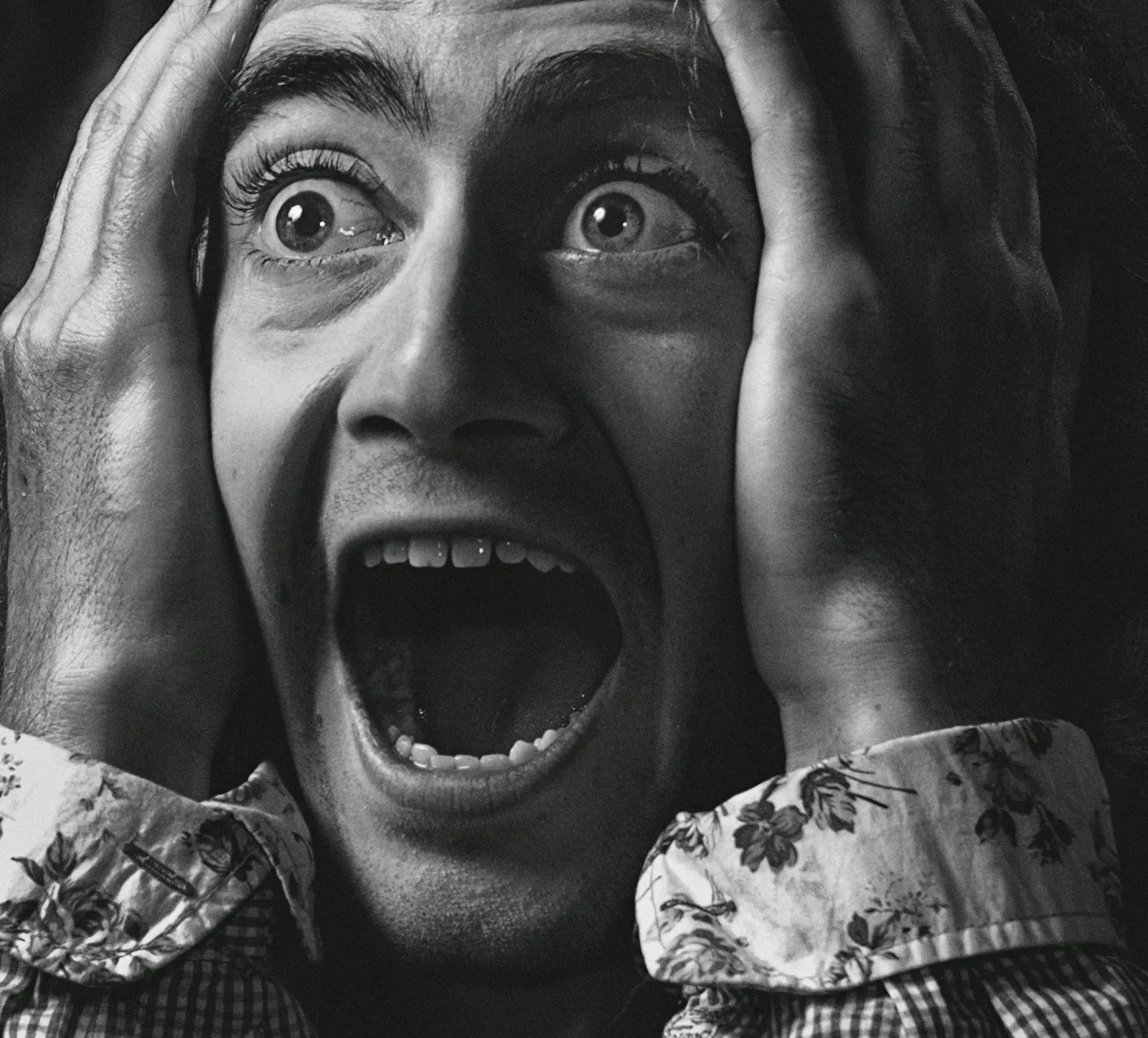
The chase is one of the oldest narrative structures in human experience — predator and prey, guilt and flight, the self and its disowned double. As a dream symbol, pursuit compresses several layers of meaning into a single visceral scenario. At its most fundamental, it encodes the tension between approach and avoidance: something in the psyche demands attention, and the dreamer's instinct is to run rather than face it. The pursuer is rarely random. Dream researchers from Hall to Hartmann have observed that the nature of the chasing figure directly reflects the dreamer's waking preoccupations: unresolved conflict takes the form of a threatening person; repressed instinct takes animal shape; existential dread becomes supernatural. The landscape of flight also speaks — running through familiar streets suggests the threat belongs to everyday life; fleeing through labyrinthine or impossible spaces signals a more archaic, symbol-laden anxiety. Crucially, the chase dream is not simply a nightmare to be escaped: it is an invitation to ask what you are avoiding and why it will not stop following you.

Frequently asked questions
- Why do I keep dreaming about being chased even when my life seems fine?
- Chase dreams do not always correspond to obvious external stress. Jung argued that they often arise precisely when the conscious self has achieved a kind of surface stability — while something unacknowledged in the psyche continues to press for attention. Low-grade emotional avoidance (a difficult conversation indefinitely postponed, a creative aspiration quietly abandoned) can generate persistent chase imagery without any dramatic waking trigger. The dream is not measuring how stressful your life looks from the outside; it is measuring what you are internally refusing to face.
- Is there anything I can do to stop being chased in my dreams?
- Both Jungian active imagination work and the lucid dreaming techniques described by Ann Faraday in 'The Dream Game' suggest the same counter-intuitive strategy: turn around and confront the pursuer. In lucid dreams, dreamers who stop running and ask the chasing figure 'What do you want?' frequently report that the terrifying presence transforms — becomes smaller, speaks, or reveals itself as a part of the dreamer's own personality. In waking life, this translates to identifying and engaging with whatever the dream figure represents: the avoided conflict, the suppressed emotion, the neglected part of the self.
- Does being chased in a dream mean someone in my life means me harm?
- In modern psychological dream theory, the short answer is: almost certainly not. The pursuer in a chase dream is an internal figure, not a literal prediction about an external person. Even when the chaser is someone you recognise, the dream is processing your emotional relationship with that person — your fear, resentment, guilt, or unfinished business with them — rather than issuing a prophetic warning. Only in traditional oneirocritical systems (such as those described by Artemidorus) were chase dreams sometimes read as omens about real enemies. Contemporary dream researchers including Hartmann regard them as emotionally themed simulations, not external forecasts.
Sources and references
- Freud, Sigmund. The Interpretation of Dreams. 1900. Translated by James Strachey, Basic Books, 1955.
- Jung, Carl G. Dreams. Collected from The Collected Works of C. G. Jung, Vol. 4, 8, 12, 16. Princeton University Press, 1974.
- Hall, Calvin S. The Meaning of Dreams. Harper & Brothers, 1953.
- Faraday, Ann. The Dream Game. Harper & Row, 1974. / Dream Power. Coward, McCann & Geoghegan, 1972.
- Hartmann, Ernest. Dreams and Nightmares: The New Theory on the Origin and Meaning of Dreams. Plenum Trade, 1998.
- Artemidorus of Daldis. Oneirocritica. 2nd century CE. Translated by Robert J. White, Noyes Press, 1975.
Comments
…