Dreaming of snow: what does this dream mean?
In short
Snow in dreams occupies a uniquely ambivalent space in the dreaming mind. Pristine and destructive, silencing and smothering, snow carries a paradox that few dream symbols match. Whether you wake from a dream of a quiet white landscape feeling strangely at peace, or from one of being buried alive in a blizzard gripped by dread, snow has been reaching into the unconscious and leaving its cold impression for as long as people have dreamed and written about dreaming. Across English-language traditions, Anglo-American folklore, and the major schools of depth psychology, snow consistently emerges as a symbol of transformation, emotional numbing, purity, and the double-edged quality of stillness — a rest that can become a trap.
What are the interpretations of this dream?
Psychoanalytic interpretation (Freud, Jung)
According to Sigmund Freud
For Freud, water in all its forms carries the valence of the unconscious and of birth — and snow, as frozen, withheld water, introduces the additional dimension of repression. In 'The Interpretation of Dreams' (1900), Freud emphasises that natural phenomena in dreams frequently encode emotional states the dreamer cannot directly acknowledge. Snow, being water arrested in transformation, may symbolise libidinal energy that has been suppressed or placed in cold storage — desires, grief, or anger that the psyche has refused to let flow. Being buried in snow in a Freudian reading often signals overwhelming repression; walking lightly across an unbroken white surface may suggest a wish to remain untouched by the messy currents of desire or loss.
According to Carl Gustav Jung
Jung placed snow within the broader symbolic matrix of whiteness, winter, and the prima materia of alchemical transformation. In 'Man and His Symbols' (1964, posthumous), Jung and his collaborators explore how the natural world furnishes the unconscious with its most potent imagery. Snow, for Jung, often announces the approach of the Self — the deep centre of the psyche — through an experience of radical stillness and emptiness that must be crossed before renewal becomes possible. The frozen landscape is the nigredo temporarily held: everything appears dead, yet beneath the surface, transformation is already underway. A blizzard may manifest the Shadow, an overwhelming force of unconscious content the dreamer has avoided confronting. A single snowflake, observed in precise detail, can in a Jungian reading signal the beginning of individuation — the move toward wholeness through attending to what is delicate, transient, and singular.
Traditional and oneirocritic interpretation
In the older Anglo-American tradition of dream interpretation — represented by almanac-style dream books widely circulated in 19th-century Britain and the United States — snow was treated as a sign of mixed fortune whose meaning hinged on texture and action. Fresh, clean snow falling gently was taken as an omen of purification, of debts cleared, or of a fresh start following a period of difficulty. Melting snow signalled the end of a cold spell in one's affairs: money owed would be returned, a estrangement would warm. Being lost in a snowstorm, however, pointed toward confusion in one's plans and a need to wait before acting. Ann Faraday, in 'The Dream Game' (1974), builds on this practical tradition by encouraging dreamers to interrogate the emotional texture of the scene rather than hunt for fixed meanings — how the snow felt under foot, whether the cold was welcome or threatening, matters more than the snow itself.
According to cultural and religious traditions
Tradition Christian symbolism
In Christian iconography and literature, snow is one of the most direct symbols of divine purification. Psalm 51:7 — 'Wash me, and I shall be whiter than snow' — establishes snow as the benchmark of spiritual cleanliness in the English-language Biblical tradition. Dreaming of snow within a religious framework is frequently interpreted as a call to confession, a longing for absolution, or an awareness of one's own moral state. The whiteness is not merely aesthetic but represents the complete erasure of sin and guilt.
Tradition Norse and Northern European folklore
In Norse tradition, snow was intimately linked to Skadi, goddess of winter and hunting, and to the concept of the quiet hunt — patience, endurance, and the willingness to inhabit hostile environments with skill. Dreams of snow in this cultural lineage are often read as invitations to cultivate resilience and to find power in withdrawal. The long Nordic winter, far from being purely a season of death, was understood as a time of inner preparation; snow dreams were seen as signals to conserve energy and gather strength before spring action.
Tradition Native American traditions (Northern peoples)
Among many northern Indigenous peoples of North America, snow is a living, differentiated presence — languages such as Inuktitut famously carry dozens of terms for different snow conditions, each with distinct practical and spiritual valences. In dream traditions of these cultures, the type of snow observed matters enormously: hard-packed snow underfoot suggests a firm path ahead; soft, treacherous snow beneath an apparently solid crust warns of hidden dangers or deceptions in one's waking life.
Dreaming of snow: what does the context mean?
| Dream situation | Interpretation |
|---|---|
| Watching snow fall gently outside a window | This is among the most peaceful snow-dream scenarios and typically points to a genuine need for rest and withdrawal. The dreamer is separated from the snow — observing it safely from inside — suggesting a healthy psychological distance from a period of transition or emotional cooling. It may indicate readiness to let certain things settle and become still before the next phase of activity. |
| Being lost or buried in a blizzard | Disorientation or burial in driving snow is one of the more distressing snow-dream variants and commonly correlates with feelings of overwhelm, loss of direction, or emotional shutdown in waking life. Ernest Hartmann, in 'Dreams and Nightmares' (1995), notes that the most emotionally intense dream images — including extreme weather — tend to emerge when a dreamer is processing unresolved anxiety or trauma. Being buried specifically may relate to a fear of suffocation in relationships, career, or expectations. |
| Playing or feeling joyful in fresh snow | Dreams of joyful play in clean snow — building snowmen, sledding, feeling the crunch underfoot with pleasure — draw on the deep associative link between snow and childhood. Calvin S. Hall, in 'The Meaning of Dreams' (1953), demonstrated through large-scale dream content analysis that positive affect in dreams is often tied to regression toward earlier, simpler states of being. Such a dream may signal a healthy impulse to reconnect with playfulness, spontaneity, or a part of the self that has been suppressed by adult responsibility. |
| Seeing dirty or grey snow | Soiled snow — ploughed grey slush, blackened drifts at the roadside — inverts the purity symbolism entirely. The ideal of cleanliness has been contaminated. This image frequently corresponds to disillusionment: a relationship, project, or belief that once seemed pure or promising has been revealed as more complicated, disappointing, or compromised. It may also reflect shame or a sense that the dreamer's own good intentions have been muddied by circumstance or their own actions. |
| A landscape of snow that is completely silent and still | The total silence of a snowbound landscape — the muffling of sound that real snow produces — is one of the most distinctive sensory details a dreamer can encounter. Psychologically, this often maps onto a longing for stillness, for the cessation of internal noise, anxiety, or the competing demands of others. It can also carry a subtler warning: stillness taken too far becomes numbness, and the dream may be asking whether the emotional quiet the dreamer is seeking is genuinely restorative or is in fact a form of dissociation or avoidance. |
What does snow symbolize in dreams?
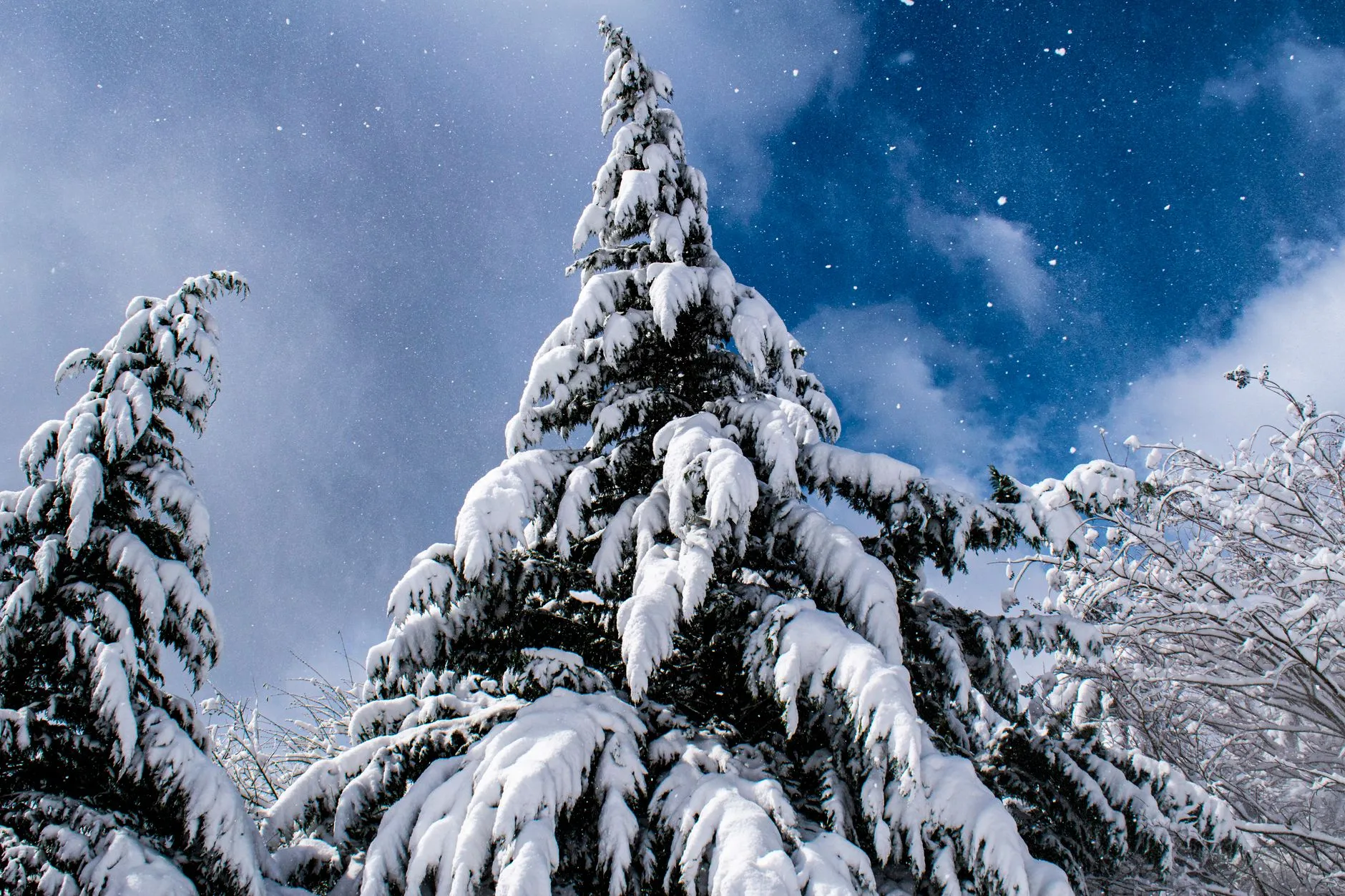
Snow concentrates several symbolic threads that recur across cultures and centuries: purity and whiteness, the suspension of ordinary life, death-that-is-not-death (because spring always follows), and the democratic blanketing of the landscape — snow covers everything equally, erasing distinctions and hierarchies. In the English literary tradition, snow carries this moral weight conspicuously: think of the closing lines of James Joyce's 'The Dead', where snow falling 'faintly through the universe' becomes the image of universal mortality and the levelling of the living and the dead. In dreams, snow rarely means only one thing. Its most persistent symbolic register is transformation held in suspension — the world has changed, but the change has not yet resolved into its final form. To dream of snow is often to dream from within a threshold: between states, between seasons, between versions of oneself.
Frequently asked questions
- Does dreaming of snow always mean something emotionally cold or distant?
- Not necessarily. While snow is frequently associated with emotional cooling, numbness, or withdrawal, dreams of joyful snow — play, beauty, peaceful observation — are equally common and carry quite different meanings. The emotional tone you wake with is the most reliable guide: the same snowy landscape can mean restful clarity to one dreamer and ominous isolation to another. Ann Faraday's approach in 'The Dream Game' emphasises attending to your felt sense of the dream above any fixed symbolic dictionary entry.
- I dreamed I was trying to drive through a snowstorm and kept losing control. What might this mean?
- Dreams of losing control of a vehicle in dangerous winter conditions are a specific subtype of snow dream that draws on both the snow symbolism and the car-as-personal-agency symbolism. The combination typically reflects a waking-life situation where the dreamer feels they are pressing forward with a plan or commitment while conditions — emotional, practical, or relational — are actively working against them. It is worth asking: in waking life, is there somewhere you are pushing on despite clear signs that conditions are not right?
- What does it mean if the snow in my dream is melting rapidly?
- Melting snow is a transitional image of genuine psychological weight. It suggests that a period of coldness, emotional shutdown, or suspended animation is coming to an end. Depending on context, this can feel hopeful — a thaw after grief, the loosening of rigid patterns — or anxious, if the melt seems to be happening too fast, threatening flood. In the older Anglo-American dream tradition, melting snow was consistently read as a sign that difficulties were dissolving and movement was returning to stalled affairs.
Sources and references
- Sigmund Freud, 'The Interpretation of Dreams' (Die Traumdeutung, 1900; English trans. James Strachey, Basic Books)
- Carl Gustav Jung et al., 'Man and His Symbols' (1964, Doubleday)
- Calvin S. Hall, 'The Meaning of Dreams' (1953, Harper & Brothers)
- Ann Faraday, 'The Dream Game' (1974, Harper & Row)
- Ernest Hartmann, 'Dreams and Nightmares: The New Theory on the Origin and Meaning of Dreams' (1995, Plenum Press)
Comments
…