Dreaming of hospital: what does this dream mean?

In short
A hospital in a dream rarely signals a literal medical crisis. It is one of the psyche's most potent thresholds — a place where the boundary between wholeness and fragility is rendered visible. Because waking life associates hospitals with both rescue and dread, with the antiseptic smell of mortality and the quiet miracle of recovery, the dream hospital concentrates an unusual density of meaning. Most dreamers wake from hospital dreams with a residue of unease even when the dream itself was benign, suggesting that the unconscious is using the setting to flag something that urgently needs attention — whether a wound that has been ignored, a relationship that is draining vitality, or a long-deferred inner reckoning. Understanding what aspect of healing the hospital points toward — and who is the patient in the dream — is the key interpretive move.
What are the interpretations of this dream?
Psychoanalytic interpretation (Freud, Jung)
According to Sigmund Freud
For Freud, whose foundational work The Interpretation of Dreams (1900) established that the body's own organic stimuli can seed dream imagery, a hospital setting may arise from somatic sources — unacknowledged physical discomfort, fatigue, or the body's muted alarm about neglected health. Freud noted that illness-related dreams often carry a wish-fulfillment dimension: the dreamer wishes to be cared for, relieved of responsibility, or granted permission to rest. The hospital, then, can be the unconscious staging of a regressive wish — to return to a state of being tended, as one was in early childhood. Anxiety about one's own mortality or bodily integrity, another major Freudian theme, frequently surfaces in hospital settings, displacing fears that would be intolerable if acknowledged directly.
According to Carl Gustav Jung
Jung's framework adds considerably more scope. He regarded hospitals as an image of the Self's demand for individuation — the lifelong process of integrating unconscious material into conscious life. A hospital dream often arises at a moment of psychological stagnation, when a part of the psyche that has been split off, wounded, or denied is pressing for recognition. Jung's concept of the Wounded Healer — articulated in his seminars and elaborated by later analysts — is directly relevant: the figure of the surgeon, nurse, or attending physician in a hospital dream may represent an inner healer archetype, that dimension of the Self that already knows how to mend what has broken. Being admitted as a patient, in this reading, is not humiliation but necessary submission to a larger, wiser process. The sterile, institutional quality of the hospital can also represent the persona — the ordered, public face the dreamer maintains — under threat from the rawer energies of the shadow.
Traditional and oneirocritic interpretation
Traditional Western dream books, from the nineteenth-century almanac tradition through to twentieth-century popular dictionaries, generally treated the hospital as an omen of transition rather than catastrophe. Being admitted to a hospital foretold a period of enforced rest and inward reflection; leaving a hospital under one's own power signaled the end of a difficulty and imminent recovery — literally or figuratively. Older English almanac traditions, which drew on earlier humoral medicine, saw hospital dreams as the body speaking its own prognosis: the unconscious noticing symptoms before the waking mind had registered them. Ann Faraday, in her landmark work Dream Power (Berkley, 1972), emphasized that dream images of illness and institutional care rarely predict physical disease and instead invite the dreamer to ask: what in my emotional or relational life is sick? Her practical approach encouraged dreamers to treat every figure in the hospital — patient, doctor, visitor — as a facet of the dreamer's own inner life.
According to cultural and religious traditions
Tradition Christian and Western spiritual tradition
Medieval European hospitals were founded by monastic orders as houses of mercy; the word itself descends from Latin 'hospes' (guest, stranger). In this lineage, dreaming of a hospital carries echoes of Christian caritas — the call to compassion, the recognition of one's fragility before God, and the expectation of grace. To be tended in a dream hospital can symbolize divine mercy; to be turned away can signal a spiritual crisis or feeling of unworthiness seeking resolution.
Tradition Islamic dream interpretation (ta'bir al-ru'ya)
Classical Islamic oneirocriticism, rooted in the tradition traced from Ibn Sirin's eighth-century Muntakhab al-Kalam, treats a hospital as a sign of relief after hardship and the mercy of God made tangible. Entering a hospital and emerging healed portends resolution of a pressing difficulty; remaining trapped within can point to prolonged trial or spiritual inertia requiring repentance and renewed trust.
Tradition Contemporary secular Western culture
In a culture saturated with medical dramas and the language of mental health, the hospital has become a secular temple of both hope and existential confrontation. Contemporary Anglophone dreamers frequently report hospital dreams during periods of burnout, grief, or life transition — moments when the psyche borrows the most culturally legible image of crisis-and-care to communicate that something needs professional-grade attention, even if that attention turns out to be introspective rather than clinical.
Dreaming of hospital: what does the context mean?
| Dream situation | Interpretation |
|---|---|
| You are the patient, admitted against your will or under duress | A sense of powerlessness or loss of control in waking life. Some aspect of your health — emotional, relational, or physical — has reached a point where ignoring it is no longer viable. The psyche is staging an intervention on its own behalf, pressing you to accept help, slow down, or address a vulnerability you have been deflecting. |
| You are a doctor, nurse, or caregiver within the hospital | The healer role may reflect genuine capacity for empathy and care — but can equally signal over-functioning, or the tendency to manage others' crises as a way of avoiding one's own. Jungian analysts would also read this as the wounded healer archetype made visible: the inner figure who has turned personal suffering into the capacity to witness and assist. |
| You are visiting someone else in the hospital | The person you are visiting almost always represents a part of yourself — an inner child, a neglected creative impulse, a suppressed emotion — that is in distress. The visit can be a gesture of compassion toward that inner figure, or, if you feel helpless at the bedside, a signal that you do not yet know how to tend that wounded part of yourself. |
| The hospital is chaotic, filthy, or nightmarish — staff ignore you, corridors are endless | A classic anxiety dream architecture, often appearing during acute stress, grief, or overwhelming workloads. The malfunctioning hospital reflects the dreamer's fear that no support system will prove adequate; that help sought will not arrive; that the self is more fragile than the world is equipped to care for. |
| You are discharged from the hospital, walking out into daylight | One of the more optimistic hospital images: a symbol of completion, recovery, and restored agency. Calvin Hall's cognitive theory of dreaming, developed in The Meaning of Dreams (Harper & Brothers, 1953), would identify this as the dreamer's conceptualization of themselves as capable of moving through crisis and returning to autonomous functioning — a genuinely restorative self-image made visible. |
What does hospital symbolize in dreams?
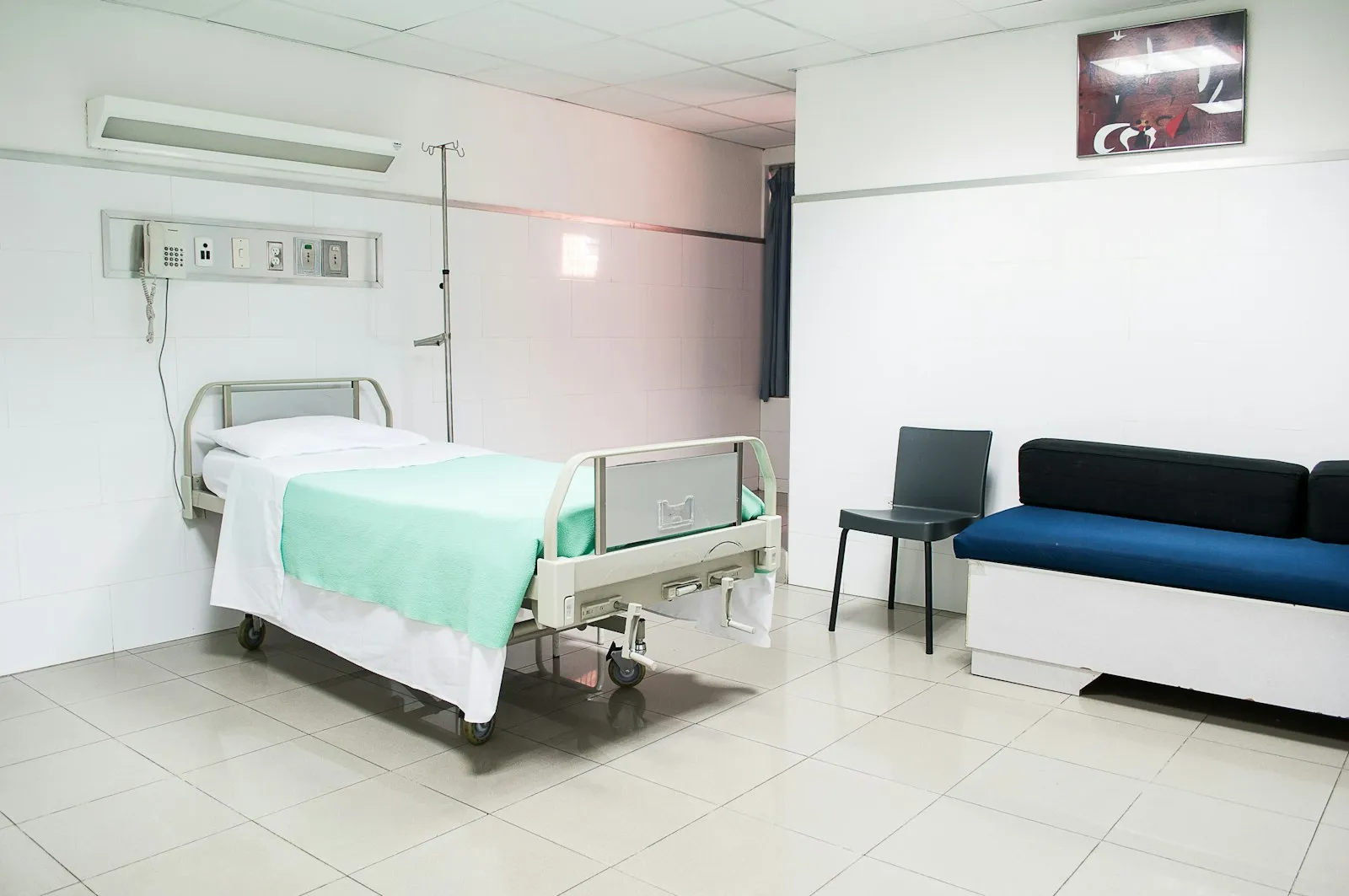
The hospital compresses several potent symbolic registers into a single architectural space. It is simultaneously a threshold between life and death, a bureaucratic institution that reduces individuals to conditions and case numbers, and a sanctuary where the most intimate human vulnerabilities are received without judgment. Its corridors, with their fluorescent light and identical doors, evoke the unconscious itself — a space of parallel processes, hidden rooms, and figures who appear and vanish. The smell of antiseptic, so vivid in hospital dreams, functions as a sensory marker of the boundary between the ordinary world and a liminal zone where normal rules are suspended. Symbolically, the hospital belongs to the same family as the labyrinth and the underworld: it is the place you enter as one self and may leave as another. Ernest Hartmann's research on boundary permeability in dreamers — developed in Dreams and Nightmares (Basic Books, 1995) — is relevant here: people with thin psychological boundaries, who are more emotionally porous and creatively open, tend to produce hospital dreams with more vivid affect and more complex narrative, suggesting that the dream hospital's symbolic richness scales with the dreamer's overall psychological sensitivity.
Frequently asked questions
- Does dreaming about a hospital mean I am going to get sick?
- Almost never. While Freud acknowledged that somatic stimuli — real bodily discomfort experienced during sleep — can seed dream imagery, contemporary dream researchers including Ann Faraday and Ernest Hartmann consistently emphasize that hospital dreams far more often reflect emotional or psychological states than they predict physical illness. The psyche borrows the most culturally available image of vulnerability and care, and the hospital is exactly that. If you have persistent health anxieties, a medical check-up is sensible, but the dream itself is not a diagnosis.
- Why do hospital dreams so often feel frightening even when nothing terrible happens in them?
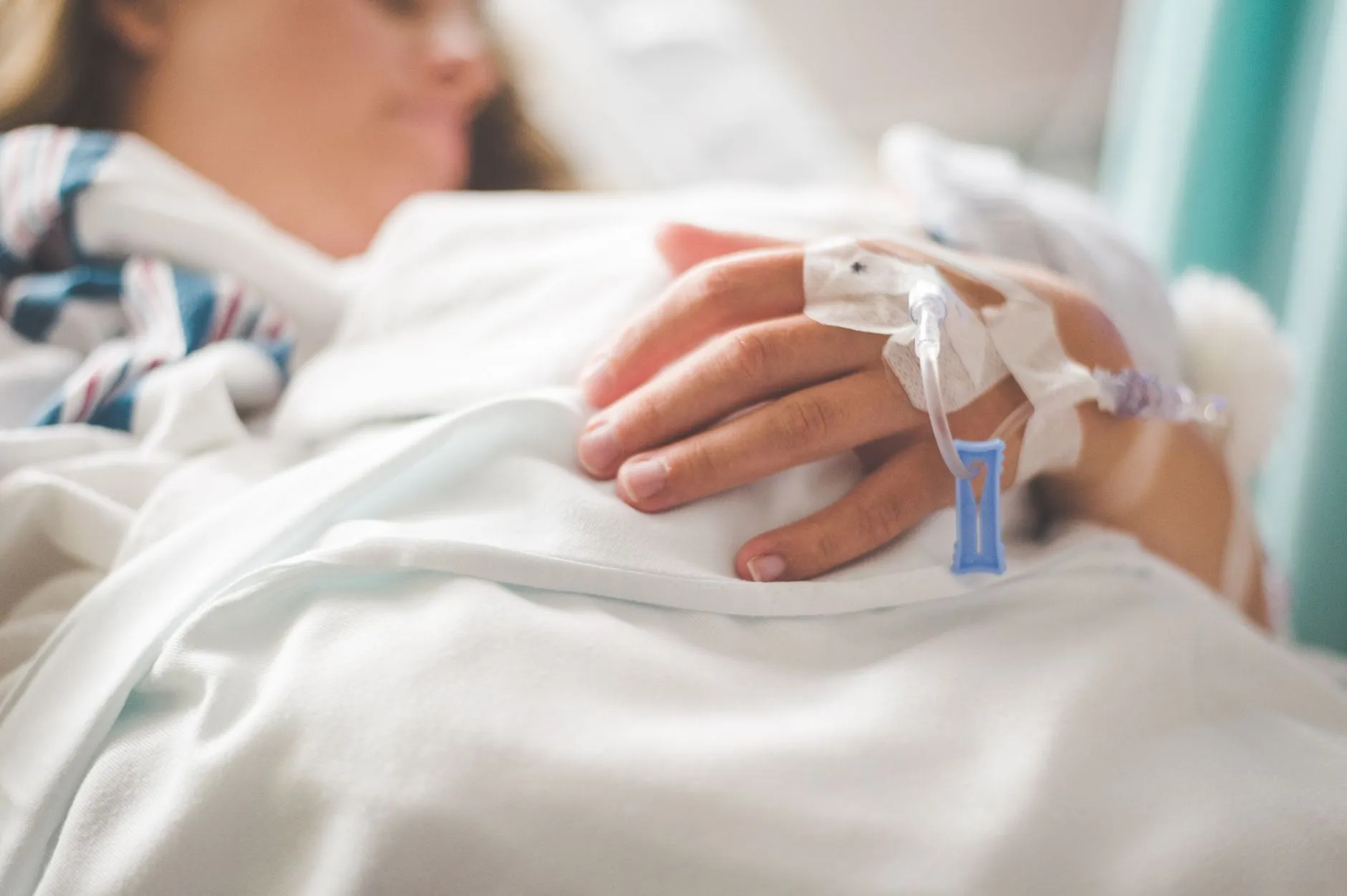
- The hospital carries a pre-loaded emotional charge drawn from waking cultural experience: hospitals are places we associate with pain, loss of control, mortality, and helplessness. Even a mundane dream hospital — a waiting room, a quiet ward — activates that stored association. The anxiety is, in a sense, the message: the dreaming mind is using the affect of the setting to underscore that something in your waking life deserves serious, careful attention rather than being brushed aside.
- I keep dreaming about the same hospital. What does recurring mean?
- Recurring settings in dreams typically signal an unresolved psychological situation. Ernest Hartmann argued in Dreams and Nightmares that recurring imagery represents the psyche's persistent attempt to work through a specific emotional concern that has not yet found resolution. A recurring hospital dream invites the question: what need for healing, care, or acknowledgment of vulnerability am I continuing to defer in waking life? The recurrence is not ominous but purposeful — the unconscious returning to the same unfinished work until it is addressed.
Sources and references
- Freud, Sigmund. The Interpretation of Dreams. Translated by James Strachey. Basic Books, 1955 (original German edition 1900). [Somatic sources of dreams, wish-fulfillment, bodily stimulus in dream formation]
- Faraday, Ann. Dream Power. Berkley Books, 1972. [Practical approach to dream imagery of illness and institutional settings; inner-life interpretation of every dream figure]
- Hall, Calvin S. The Meaning of Dreams. Harper & Brothers, 1953. [Cognitive theory of dreaming; conceptualization of self, body, and recovery in dream content]
- Hartmann, Ernest. Dreams and Nightmares: The New Theory on the Origin and Meaning of Dreams. Basic Books, 1995. [Boundary permeability, affect in dream imagery, recurring dream symbolism]
- Jung, C. G. The Practice of Psychotherapy (Collected Works, Vol. 16). Princeton University Press, 1954. [Wounded Healer archetype, individuation, the analyst's own wounding as a therapeutic instrument]
Comments
…