Dreaming of church: what does this dream mean?
In short
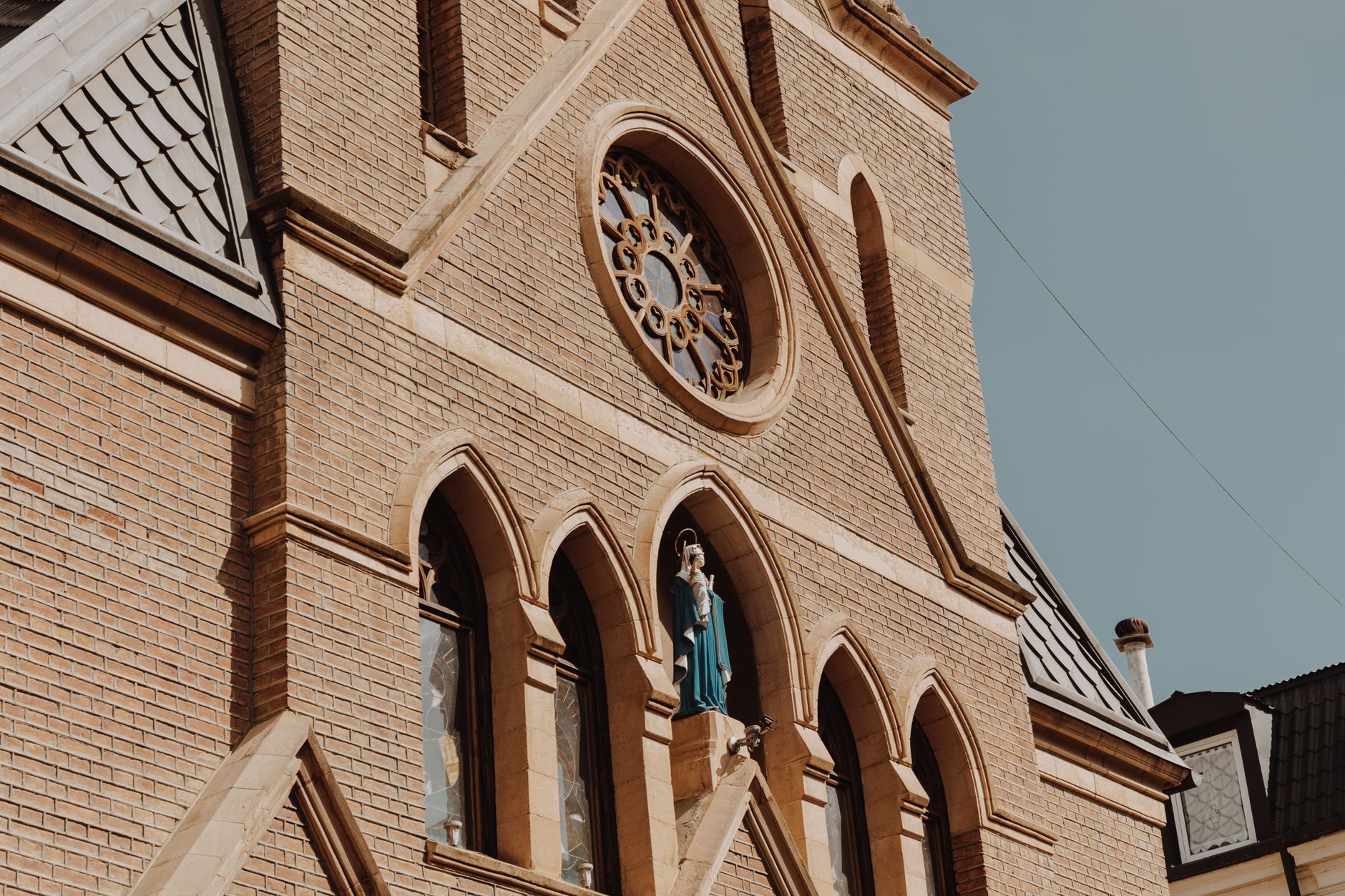
A church in dreams is one of the most layered architectural symbols the unconscious can conjure. It is simultaneously a place of refuge, a site of judgment, a repository of communal memory, and an echo chamber for personal guilt or longing. For dreamers in the English-speaking world — whether practicing Christians, lapsed believers, or those with no religious affiliation at all — the church carries enormous psychological weight rooted in cultural history, childhood memory, and the perennial human need to make sense of mortality and meaning. Unlike a simple building, the church in dreams tends to arrive already charged: its stone walls, stained-glass light, and hushed interior signal that something serious is about to be examined.
What are the interpretations of this dream?
Psychoanalytic interpretation (Freud, Jung)
According to Sigmund Freud
For Freud, enclosed institutional spaces in dreams frequently represent the body or the parental authority that shapes the superego. A church, with its vaulted interior, strict rules of conduct, and atmosphere of submission, maps neatly onto the Freudian framework as an image of internalized paternal law. Dreaming of entering a church may reflect an unconscious return to the prohibitions and moral codes instilled in childhood — what Freud described in 'The Interpretation of Dreams' (1900) as the censoring agency that stands between raw wish and conscious expression. The dream-church is, in this reading, the architecture of conscience: impressive, somewhat oppressive, and impossible to ignore.
According to Carl Gustav Jung
Carl Jung placed the church within his broader treatment of the 'Self' archetype — the organizing center of the psyche toward which individuation moves. In 'Psychology and Religion' (1938), Jung argued that religious buildings in dreams often appear at moments of significant psychological transition, when the dreamer is being called toward a deeper integration of opposites: shadow and light, earthly and transcendent. The church may represent what Jung called the 'temenos,' a sacred precinct that marks off a space where transformation can safely occur. A ruined church, by contrast, might signal a collapse of the dreamer's inner organizing framework — a crisis of meaning rather than a crisis of faith in the doctrinal sense.
Traditional and oneirocritic interpretation
In the Western European oneirocritical tradition, dating back through early modern dream-books to classical sources, a church seen in good repair and full of worshippers was consistently read as an omen of social stability, community respect, and moral integrity. To dream of praying in a church foretold comfort in times of difficulty. To find a church locked or empty, however, warned of isolation, spiritual neglect, or impending hardship. The English folk dream-lore collected in the eighteenth and nineteenth centuries — reflected in popular almanac traditions — held that dreaming of a church wedding presaged a real union, while dreaming of a church funeral could paradoxically signal a new beginning, the death of one phase of life making room for another.
According to cultural and religious traditions
Tradition Protestant (Anglican / Nonconformist) tradition
In cultures shaped by the English Reformation, the church in dreams carries an additional layer of ambivalence. The stripped-down Protestant interior — plain walls, clear glass, the emphasis on the word over image — lends itself in dreams to themes of moral accountability without ornament. To dream of standing before a congregation may reflect anxiety about being judged by one's community or one's own conscience, in a tradition where the individual relationship with God is primary and unmediated.
Tradition African American spiritual tradition
In African American cultural memory, the church is not only a place of worship but historically the central institution of community survival and resistance. Dream-lore within this tradition, as documented in scholarship on Black folk belief and the works of authors such as Zora Neale Hurston, treats the church with deep reverence: to dream of singing in a church choir can signal an ancestral blessing, while a burning church may summon collective trauma and the need for communal healing.
Tradition Celtic and rural British folk belief
In older rural English and Celtic traditions, the churchyard was as significant as the church itself — the boundary between the living and the dead. Dreaming of a church at night, especially near its graveyard, was associated with communication from deceased relatives or a heightened awareness of one's own mortality. This reflects a pre-modern understanding in which the church functioned as a threshold, not simply a destination.
Dreaming of church: what does the context mean?
| Dream situation | Interpretation |
|---|---|
| You dream of entering a sunlit, welcoming church | This is generally a reassuring image. Psychologically, it suggests you are moving toward a sense of inner peace, ethical clarity, or reconciliation with a value system you may have abandoned. Ann Faraday, in 'The Dream Game' (1974), observed that positive institutional spaces in dreams often signal the dreamer's readiness to commit to something larger than personal desire. |
| You dream of a dark, abandoned, or ruined church | A derelict church points toward a loss of meaning or the collapse of a belief structure — religious, ideological, or relational — that once provided orientation. This image frequently appears during periods of grief, disillusionment, or existential questioning. It invites reflection rather than alarm: what framework once held you that no longer does? |
| You dream of being unable to enter a church, or finding the doors locked | Exclusion from a sacred space is a recurring motif of shame and self-judgment. The dreamer may feel unworthy, cut off from a community or inner source of solace. It can also reflect conflict with institutional authority — religious, social, or professional — and the sense of being barred from belonging. |
| You dream of a ceremony inside a church (wedding, funeral, baptism) | The specific rite matters enormously. A wedding suggests union, commitment, or the integration of opposing aspects of the self. A funeral — as noted by Calvin S. Hall in 'The Meaning of Dreams' (1953) — rarely predicts literal death; more often it marks an ending the dreamer already senses: a relationship, a life chapter, an old identity. A baptism may signal renewal or a desire for a fresh start. |
| You dream of a church from your childhood | The return to a specific, recognizable church is almost always a return to an earlier self. The dream is excavating the emotional landscape of your formative years — the rules, the comfort, the confusion, or the transcendence you experienced there. Ernest Hartmann's research on the contextualizing function of dreams ('Dreams and Nightmares,' 1998) would suggest this image is being used to process a present emotional situation through the lens of a deeply coded past memory. |
What does church symbolize in dreams?
The church as a dream symbol draws its power from a convergence of architectural, social, and spiritual meanings that are deeply embedded in Western cultural memory. Architecturally, the church points upward — spires, vaulted ceilings, and tall windows are all vertical gestures, aligning the building symbolically with aspiration, transcendence, and the movement from the earthly to the divine. In dream logic, this verticality can represent the dreamer's own desire to rise above immediate concerns and connect with something of lasting significance. The threshold of the church is equally important: crossing its doors marks a passage from the secular to the sacred, from noise to silence, from the individual to the communal. In dreams, this threshold often externalizes an internal transition the dreamer is navigating in waking life. The church is also a place of memory: generations of births, marriages, and deaths have been marked within its walls, giving it a quality of accumulated human time that no other building quite matches. This makes it, in the dream landscape, a natural symbol for questions of legacy, continuity, and the weight of what has been passed down.

Frequently asked questions
- Does dreaming of a church mean I am religious or becoming religious?
- Not necessarily. Psychologists from Jung onward have emphasized that the church in dreams functions as a symbol of the psyche's need for meaning, structure, and transcendence — needs that exist independently of doctrinal belief. Many people with no active religious life dream of churches at moments of moral reckoning, grief, or personal transformation. The dream is drawing on the cultural and emotional charge of the building, not making a theological statement.
- I dreamed a church was on fire — should I be worried?
- A burning church is a vivid and unsettling image, but in dream interpretation it rarely signals literal disaster. Fire in dreams is profoundly ambivalent: it destroys and purifies simultaneously. A burning church may represent the collapse of a belief system or institution you once relied on, but it can equally point toward a necessary clearing — the burning away of rigid structures to allow something more authentic to emerge. The emotional tone of the dream (terror vs. awe) is a useful guide to which reading resonates.
- Why do I keep dreaming of a specific church from my past?
- Recurring location dreams tend to anchor unresolved emotional material. A church from your childhood or a significant period of your life becomes a symbolic container for everything that happened during that time — the relationships, the moral questions, the sense of belonging or exclusion. These dreams often intensify during periods of life review: major transitions, anniversaries, or encounters with loss. The recurring church is inviting you to revisit something that remains emotionally unfinished.
Sources and references
- Freud, Sigmund. The Interpretation of Dreams. Trans. James Strachey. Basic Books, 1900/1955.
- Jung, Carl G. Psychology and Religion: West and East. Collected Works Vol. 11. Princeton University Press, 1938/1969.
- Hall, Calvin S. The Meaning of Dreams. Harper & Brothers, 1953.
- Faraday, Ann. The Dream Game. Harper & Row, 1974.
- Hartmann, Ernest. Dreams and Nightmares: The New Theory on the Origin and Meaning of Dreams. Plenum Trade, 1998.
Comments
…