Dreaming of exam: what does this dream mean?
In short
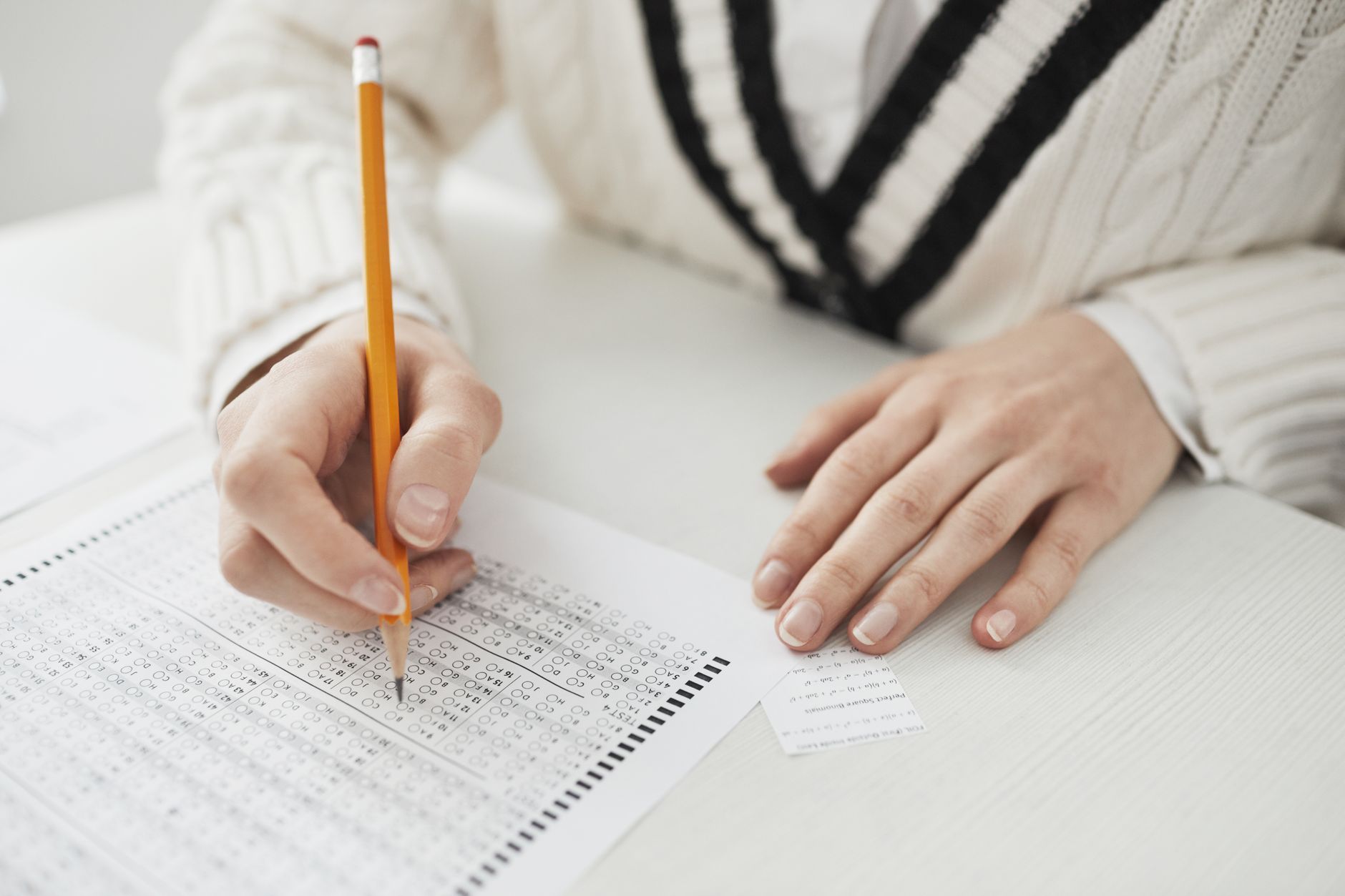
Few dream scenarios feel as immediately recognizable as the exam dream: you find yourself in a test hall, pencil in hand, staring at questions you cannot answer, or you realize — with a lurch of dread — that you forgot the exam was today. Across cultures and age groups, this dream ranks among the most commonly reported. It surfaces not only in students but in adults who graduated decades ago, suggesting it taps something far deeper than literal academic memory. Psychologists, folklorists, and dream researchers across the English-speaking world have documented the exam dream as a concentrated symbol of self-evaluation, performance anxiety, and the perpetual human fear of being found inadequate.
What are the interpretations of this dream?
Psychoanalytic interpretation (Freud, Jung)
According to Sigmund Freud
For Freud, anxiety dreams involving examinations occupy a specific and revealing place. In The Interpretation of Dreams (1900), he notes that adults who dream of failing school examinations typically passed those very exams in waking life, and he interprets the dream as the unconscious deploying a memory of past success to reassure the dreamer against a present-day anxiety. The exam is thus a displaced representation of a current test — professional, relational, or moral — that the dreamer fears failing. Freud links the emotional charge of the dream to castration anxiety in its broader sense: the fear of humiliation, of exposure before an authoritative gaze, of not measuring up to the demands of the superego.
According to Carl Gustav Jung
Carl Jung extended the symbolism considerably. For Jung, the exam dream often signals what he called a 'performance complex' — an internalized judge, usually shaped by parental or cultural authority figures, who sets impossible standards. The exam hall in the dream is an archetypal arena of initiation: you are being tested not by a school board but by the Self. Jung observed that when the dreamer repeatedly fails a test they passed long ago, the psyche is pointing toward unfinished inner work — a lesson the ego has not yet integrated. Seen through a Jungian lens, the exam may be an invitation rather than a punishment: the unconscious staging a confrontation with one's authentic capabilities versus one's social persona.
Traditional and oneirocritic interpretation
In classical Western dream interpretation, going back to the Oneirocritica of Artemidorus of Daldis (2nd century CE, trans. Robert J. White, 1975), being subjected to judgment or public trial in a dream was generally read as an omen about one's standing in the community. The modern exam dream is a secular heir to these older trial-by-judgment scenarios. English-language dream almanacs of the 19th century, which circulated widely in Britain and America, consistently interpreted school or test scenes as warnings against overconfidence or signs that a difficult decision was approaching. The popular 'dream book' tradition held that dreaming of passing an exam promised good fortune and social advancement, while dreaming of failing forecast embarrassment or financial setback.
According to cultural and religious traditions
Tradition Protestant Christian tradition (English-speaking)
In English Protestant culture, which placed enormous weight on individual conscience and moral accountability, the exam dream carries echoes of the Last Judgment — the ultimate divine examination of one's soul. The solitary student before the examiner mirrors the solitary soul before God. This cultural undercurrent helps explain the particular intensity that exam dreams carry for people raised in this tradition, even when they are no longer practicing believers.
Tradition Secular Western academic culture
The competitive examination system, formalized in British civil service reform in the mid-19th century and exported globally through colonialism, embedded the exam as a defining ritual of modern life. Dream researcher Ann Faraday, in The Dream Game (1974), argued that the exam dream is a product of an achievement-obsessed culture that teaches people to measure their worth through performance. From this angle, the dream is a cultural symptom as much as a personal one.
Dreaming of exam: what does the context mean?
| Dream situation | Interpretation |
|---|---|
| You are unprepared — you haven't studied, don't know the subject, or arrive with no pen | This is the most prevalent variant, documented extensively by Calvin S. Hall in The Meaning of Dreams (1953). It encodes the fear of being exposed as incompetent or fraudulent in a domain where you are expected to perform. In adult life it frequently correlates with a new responsibility, a job interview, or a high-stakes social situation where you feel your credentials may not hold up. |
| You pass the exam or answer every question with confidence | A reassuring exam dream often follows a period of genuine mastery or preparation. Ernest Hartmann's research on dream emotions (Dreams and Nightmares, 1998) suggests that positive dream outcomes signal the brain consolidating a sense of competence. This variant can also represent a resolution of long-standing self-doubt. |
| You realize the exam is in a subject you never studied or that the questions are in an unknown language | This surreal variant intensifies the core fear into existential territory: you are being judged by criteria you cannot even comprehend. It frequently appears during periods of major transition — starting a new career, entering a foreign culture, becoming a parent — where the rules of the game feel entirely unfamiliar. |
| You are late to the exam or cannot find the exam room | The spatial and temporal disorientation points to a felt loss of control over time and opportunity. Dream analyst Ann Faraday interprets this as a common stress-response dream in people who overcommit and fear they are always one step behind. It may also reflect grief over missed chances that cannot be recovered. |
| You are an adult sitting an exam surrounded by young students | The generational mismatch carries its own symbolic weight: the dreamer is revisiting the criteria by which they were once judged and finding them still operative. Jungian analysts read this as the puer aeternus archetype — the part of the psyche that refuses to be done with proving itself — or as the dreamer being called to mentor or reassess an old identity. |

What does exam symbolize in dreams?
The exam is one of modern civilization's most potent initiation rites. Unlike ancient ordeals of fire or flood, it abstracts the test of worthiness into a purely cognitive and social performance measured by strangers. In dreams, this structure is preserved and amplified: the dreamer stands alone, the clock ticks, the questions are inscrutable, and the stakes feel absolute. The exam room functions as a compressed theater of judgment, where the dreamer's entire value as a person seems to hang on a single performance. The blank exam paper can symbolize the terrifying openness of the future, while the pencil — fragile, erasable — stands for the provisional nature of all human answers. Symbolically, the exam dream asks: Do you believe you are enough? And it asks this with ruthless efficiency, stripping away credentials, relationships, and context until only raw adequacy remains. Recurring exam dreams in successful adults often point less to fear of failure in the conventional sense and more to what psychotherapist and dream writer Gayle Delaney called 'impostor anxiety' — the suspicion that one's achievements have been a lucky bluff about to be called.
Frequently asked questions
- Why do I keep dreaming about failing an exam I passed years ago?
- Freud was the first to notice this paradox. His explanation — that the unconscious uses a remembered success to manage a current anxiety — remains influential. Most contemporary sleep researchers and therapists agree that the specific exam is a vehicle, not the message. Your brain is rehearsing the emotional texture of 'being tested and found wanting' in relation to something happening in your present life, whether a job evaluation, a relationship challenge, or a personal goal you fear you cannot meet.
- Is the exam dream more common among people who were anxious students?
- Research by Calvin S. Hall and Robert Van de Castle, summarized in The Content Analysis of Dreams (1966), found exam dreams broadly distributed across education levels and temperaments, though they are more vivid and more distressing in people with higher trait anxiety. The key trigger is not academic history but any waking context that activates a performance-evaluation schema — the same neural and emotional pathways that were first laid down in school.
- Can an exam dream ever be a positive sign?
- Yes. When you dream of passing an exam cleanly, or of feeling calm and prepared in the test hall, it can reflect genuine psychological consolidation — your mind processing a gain in competence or confidence. Ann Faraday noted that some dreamers report exam dreams shifting from failure to success over the course of therapy or personal growth, which she interpreted as a reliable internal indicator of improved self-esteem.
Sources and references
- Freud, Sigmund. The Interpretation of Dreams (1900). Trans. James Strachey. Basic Books, 1955.
- Hall, Calvin S. The Meaning of Dreams. Harper & Brothers, 1953.
- Faraday, Ann. The Dream Game. Harper & Row, 1974.
- Hartmann, Ernest. Dreams and Nightmares: The Origin and Meaning of Dreams. Plenum Trade, 1998.
- Hall, Calvin S. and Van de Castle, Robert L. The Content Analysis of Dreams. Appleton-Century-Crofts, 1966.
- Artemidorus of Daldis. Oneirocritica. Trans. Robert J. White. Noyes Press, 1975.
Comments
…