Dreaming of spider: what does this dream mean?
In short
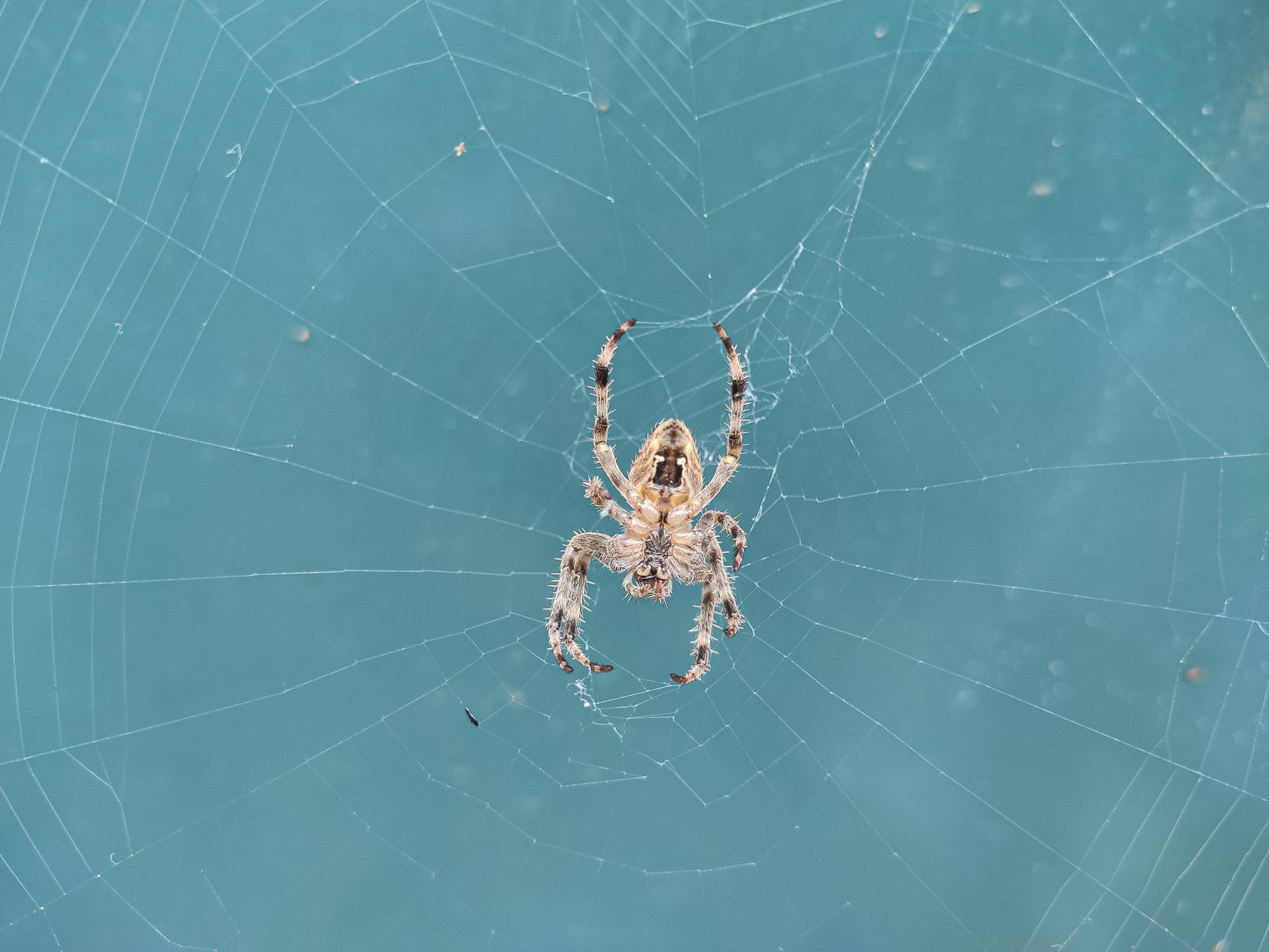
Dreaming of a spider most often conjures a complex, ambivalent feminine figure — creator, manipulator, or protector depending on the scene. The spider and its web stand for patience, strategy, and the threads that either ensnare us or hold us safe. Such a dream can also mirror the sense of being trapped in a situation or a relationship you cannot easily leave.
What are the interpretations of this dream?
Psychoanalytic interpretation (Freud, Jung)
According to Sigmund Freud
Freud says little directly about the spider in his writings on dreams, but later analysts elaborated the idea that the spider often represents a devouring or smothering maternal figure. The "spider mother" — who spins her web around the child to capture rather than release — became a classic image in post-Freudian psychoanalysis for describing certain family dynamics. Karl Abraham, in his short paper on the spider as a dream symbol, explicitly linked it to the dangerous, phallic mother. A spider in a dream may thus voice a fear of being manipulated, controlled, or quietly "consumed" by an authority figure or by an attachment that has become suffocating.
According to Carl Gustav Jung
Jung connects the spider to the archetype of the Great Mother in both her aspects — nourishing and devouring. The web is the image of the fabric of destiny, close kin to the Greek Moirai (the Roman Fates) who spin, measure, and cut the thread of life. In some contexts the spider also figures the anima, the feminine dimension of the masculine psyche. Its weaving skill stands for creativity itself — the power to construct one's own reality thread by thread. Within the collective unconscious, then, the spider is danger and creator at once, and the dreamer's task is to discern which face is being shown.
Traditional and oneirocritic interpretation
Anglophone folk tradition is famously ambivalent about the spider. An old English rhyme runs, "If you wish to live and thrive, let a spider run alive" — killing one was thought to bring bad luck and even rain. The legend of Robert the Bruce watching a spider patiently rebuild its web turned the creature into a national emblem of perseverance: try, try, and try again. In a dream, a spider calmly spinning can therefore read as patience rewarded, work coming to fruition. A threatening or venomous spider, however, has long been tied to a sly enemy or a deceitful, manipulative presence in one's circle. The web itself carries the older folk associations of the trap, the snare, and the tangled net of intrigue.
According to cultural and religious traditions
Tradition native_american_traditions
Across many Native American traditions — notably Hopi, Lakota, and Navajo — Spider Woman or Spider Grandmother is a foundational creator figure: she wove the world into being and taught humans the craft of weaving. The Ojibwe dreamcatcher, a webbed hoop hung to filter dreams, draws on the same protective imagery. To dream of a spider, seen through this lens, can be read as contact with that original creative force, a sign of guidance or spiritual protection rather than threat.
Tradition west_african_and_diaspora
In Akan (Ashanti) tradition and across the Caribbean and American South via the Anansi tales, the spider Anansi is a trickster and keeper of stories — clever, mischievous, and the bringer of wisdom and folktales to the world. A spider dream colored by this heritage can point to cunning, storytelling, and intelligence that outwits brute force, as well as the moral ambivalence of the trickster who is both hero and rogue.
Tradition ancient_egypt
In ancient Egypt the spider was associated with Neith, goddess of weaving, creation, and war. The spinning of the web symbolized the weaving of the cosmos itself. A spider in a dream could evoke divine protection or a creative act unfolding in the dreamer's waking life.
Dreaming of spider: what does the context mean?
| Dream situation | Interpretation |
|---|---|
| a spider descending toward you | A spider lowering itself toward you on its thread is often a symbol of approach — of a situation, a person, or a dawning realization. Depending on what you feel (dread or fascination), it can point to an imminent confrontation with something you have been avoiding, or, conversely, to a creative opportunity quietly descending into reach. |
| a web with no spider in sight | An empty web with no visible spinner usually signals a trap whose maker is absent or hidden. Are you caught in a situation someone else has constructed? The image can also stand for the networks of relationships you move through — the invisible threads connecting you to others. |
| being bitten or stung by a spider | A spider's bite in a dream evokes harm done by a figure felt to be toxic — a manipulative person, a wounding remark, a decision that injures you. The venom can equally symbolize the toxic thoughts you yourself keep turning over, the poison you brew in private. |
| a giant spider | An oversized spider amplifies every association attached to the symbol: an overwhelming maternal figure, an unbearable web of pressure, or — read the other way — an exceptional inner creativity and power, depending entirely on the emotional weather of the dream. |
| killing a spider | Killing the spider can mark a victory over manipulation or fear, a refusal to stay caught. Yet in traditions where the spider is sacred or lucky — much of anglophone folklore included — the act may read as severing a tie or destroying something precious, leaving a residue of guilt worth heeding. |
| a spider crawling on your body | A spider moving across your skin often dramatizes a creeping unease you have not yet named — a worry, an influence, or a relationship slowly working its way under your guard. Whether it feels invasive or strangely tolerable hints at how much you have already let the situation take hold. |
What does spider symbolize in dreams?
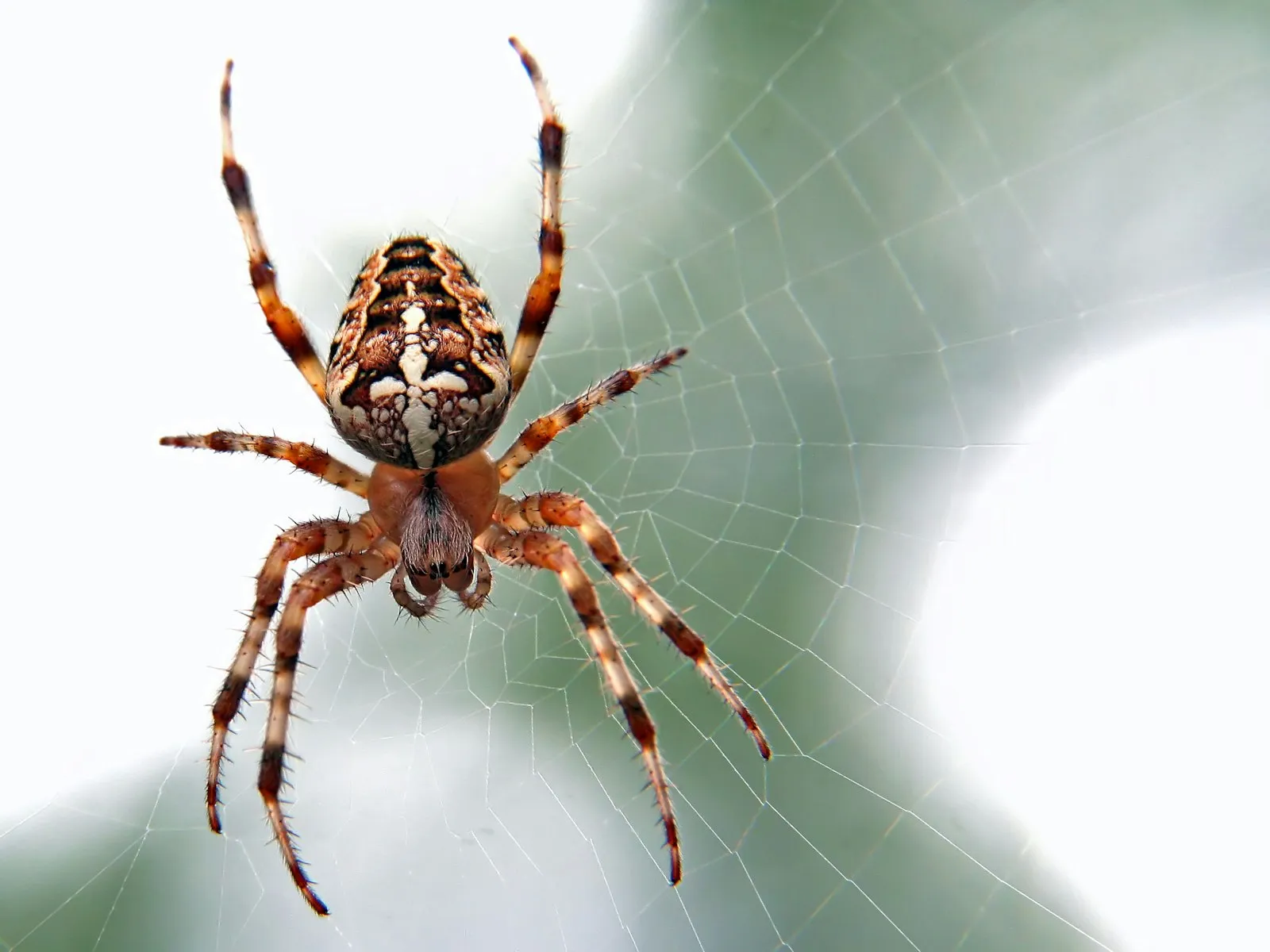
The spider is the archetype of the weaver and the maker. Its web — geometrically flawless, built with patience and method, at once a snare and a masterpiece — is one of the richest metaphors the human psyche has for itself. It speaks to our capacity to build, to connect, and to capture (prey as readily as opportunity). The spider poised at the center of its web evokes consciousness sitting at the hub of its own networks of relationships and experience. Ambivalence is the very heart of the symbol: the same silk that traps the fly is a feat of living architecture. A spider in a dream therefore tends to question our relationship to our own psychic constructions — the webs we spin to protect ourselves, and the ones in which we end up catching ourselves. To dream of a spider is, in a sense, to be shown the structure of your own making and asked whether it shelters you or holds you fast.
Frequently asked questions
- Does dreaming of a spider mean something bad is coming?
- Not necessarily. The spider is a genuinely ambivalent symbol: it can stand for a positive creative force just as easily as for a threatening figure. The emotion you feel during the dream is decisive. Watching a spider with curiosity is very different from fleeing one in panic. The context — what the spider is doing, where it appears, how big it is — shapes the meaning far more than the mere presence of the creature.
- Why do so many people dream about spiders?
- Spiders are among the animals that most reliably trigger disgust or fear in humans, and arachnophobia is one of the most common specific phobias. Research by Ohman and Mineka suggests an evolved readiness to fear such creatures. This heightened sensitivity may be why the unconscious so often reaches for the spider to represent fears or threatening situations. Its rich symbolism — trap, weaving, feminine figure — also makes it a psychically "charged" image the dreaming mind likes to use.
- Does a spider in a dream always represent a woman?
- The devouring mother and the manipulative woman are among the best-known psychoanalytic readings, but they are far from universal. A spider can equally symbolize your own creativity, a web of relationships, a complex situation, or a trap you yourself have set. Resist the urge to pin the symbol onto one specific person in your life before exploring the other possibilities.
- A spider spinning its web — good omen or bad?
- Generally positive. The patiently weaving spider is the very picture of work in progress that will eventually bear fruit — the Robert the Bruce lesson of perseverance. In personal terms it can signal that a long, difficult project is steadily moving toward completion through methodical, creative effort.
- How can I tell whether the spider means a trap or protection?
- The quality of the web and the spider's behavior are your best guides. A web crammed into a closed space, with a menacing spider and you held motionless: that reads as a trap. A broad, beautiful web in open air, with an active spider busily weaving: that reads as creation and protection. Above all, your own emotional state in the dream — dread versus admiration — is the deciding clue.
- What does it mean to kill a spider in a dream?
- Killing the spider can signal a victory over manipulation or fear, a refusal to remain caught in someone else's web. But in traditions where the spider is sacred or lucky — much of anglophone folklore included — the act can also read as severing a tie or destroying something valuable, and may leave the dreamer with a flicker of guilt worth noticing.
Sources and references
- Jung, C.G. (1964). Man and His Symbols. Doubleday / Dell, 1968.
- Neumann, E. (1955). The Great Mother: An Analysis of the Archetype. Princeton University Press (Bollingen Series), 1963.
- Cirlot, J.E. (1962). A Dictionary of Symbols (trans. Jack Sage). Routledge & Kegan Paul.
- Abraham, K. (1922). "The Spider as a Dream Symbol." In Selected Papers on Psycho-Analysis. Hogarth Press, 1927.
- Ohman, A. & Mineka, S. (2001). Fears, phobias, and preparedness: toward an evolved module of fear and fear learning. Psychological Review, 108(3), 483-522.
- Opie, I. & Opie, P. (1959). The Lore and Language of Schoolchildren. Oxford University Press.
Comments
…