Dreaming of hair: what does this dream mean?
In short
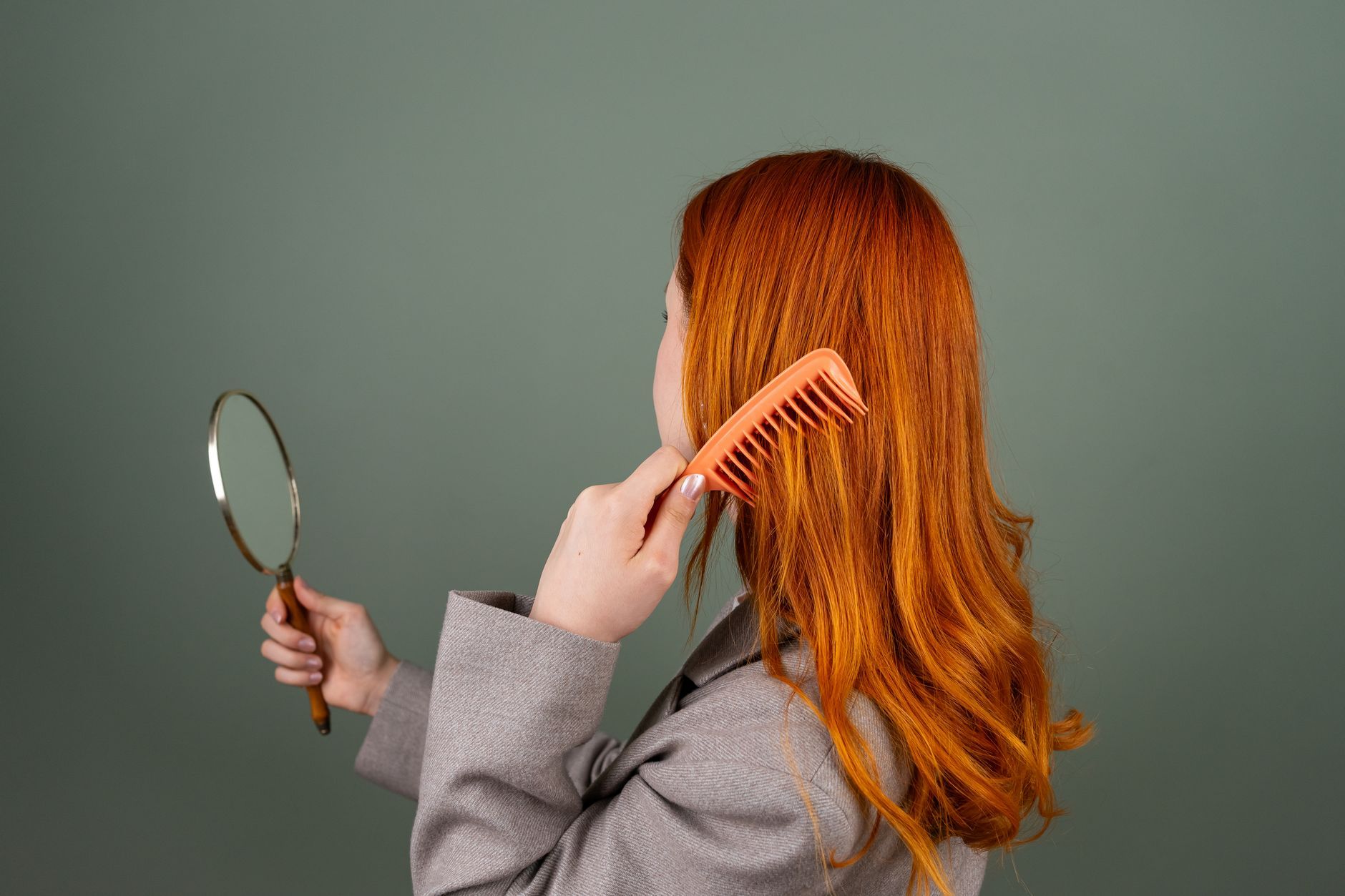
Hair is one of the most richly loaded symbols in dream life. It sits at the intersection of identity, vitality, sexuality, social status, and vulnerability. Because hair grows continuously, can be cut without pain, yet signals so much about who we are — age, health, culture, grief, rebellion — it carries an unusual density of meaning in the unconscious. Dreaming of hair in any form almost always concerns the dreamer's sense of self: how they present to the world, what they fear losing, and how much control they feel over their own life force. The mood of the dream — luxuriant and flowing versus tangled, falling out, or shorn — is the key that unlocks whether the unconscious is affirming strength or sounding an alarm.
What are the interpretations of this dream?
Psychoanalytic interpretation (Freud, Jung)
According to Sigmund Freud
For Freud, hair carried unmistakable libidinal charge. In 'The Interpretation of Dreams' (1900) and subsequent case material, he linked hair — particularly its cutting or loss — to castration anxiety, drawing on the ancient mythological connection between shorn locks and diminished power (Samson being the archetypal Western example). Dreaming of thick, abundant hair could represent sexual potency and narcissistic self-regard; dreaming of hair falling out in handfuls pointed toward fears of impotence, punishment, or the loss of youthful desirability. The act of brushing or styling another person's hair was read as displaced erotic contact.
According to Carl Gustav Jung
Jung placed hair firmly within the symbolic field of the persona — the mask the ego constructs for social life. In Jungian terms, hair is the outermost layer of the self made visible: it announces gender, tribal belonging, and social role. Dreams in which hair is cut against the dreamer's will often signal an assault on the persona, an enforced conformity, or a fear that individuation is being suppressed by collective demands. Conversely, wild, uncut, or serpentine hair in dreams — especially when it appears on an archetypal figure such as the Anima or the Wise Old Woman — can represent untamed natural energy, instinct, and the creative unconscious breaking through the mask. Ann Faraday, drawing on Jungian frameworks in 'Dream Power' (1972), emphasized that hair imagery frequently reflects the dreamer's current relationship with self-image and social authenticity.
Traditional and oneirocritic interpretation
Across the Western onirocritical tradition stretching back to Artemidorus of Daldis ('Oneirocritica', 2nd century CE), hair was consistently interpreted as a marker of personal fortune and social standing. Long, well-groomed hair foretold prosperity and honor; disheveled or matted hair predicted hardship and public disgrace. The act of having one's head shaved in a dream was among the gloomiest omens, associated with mourning, defeat, or loss of status — reflecting real-world practices in which slaves, prisoners, and the bereaved had their heads shorn. Finding hair in one's food or in unexpected places was traditionally read as a warning of deception or hidden enemies nearby. Dreaming of white or silver hair on a young person signaled premature worry or an encounter with ancestral wisdom.
According to cultural and religious traditions
Tradition Biblical and Judeo-Christian tradition
Hair as the seat of divine strength is most famously encoded in the Samson narrative (Judges 16), making it a potent symbol in Judeo-Christian dream lore. Dreams of hair being cut by an unknown person evoke betrayal and the stripping of God-given gifts. Conversely, a Nazirite vow — consecrated by letting hair grow uncut — meant that abundant hair in a dream could signify a covenant with the sacred, a calling, or unusual spiritual strength.
Tradition Celtic and Norse tradition
In Celtic and Norse cultures, hair was intimately connected to warrior honor and sovereign power. Red or flame-colored hair carried associations with fire, passion, and the Otherworld. Dreams of long braided hair could invoke ancestral protection; dreams of hair being set alight pointed to transformation through ordeal, echoing the Norse concept of a trial by fire that forges identity.
Tradition Hindu tradition
In Hindu symbolism, unbound hair on a goddess — particularly on Kali or Durga in her fierce aspect — represents raw cosmic power that exists outside social order. Dreams featuring wildly loose or matted hair can therefore signal contact with Shakti energy: transformative, potentially terrifying, but ultimately life-giving. Conversely, neatly oiled and braided hair in a dream reflects auspicious order, marital harmony, and spiritual self-discipline.
Dreaming of hair: what does the context mean?
| Dream situation | Interpretation |
|---|---|
| Hair falling out in clumps | This is one of the most distressing hair dreams and one of the most common. It typically reflects anxieties about losing control, declining health or attractiveness, aging, or a fear that personal power is draining away. In waking life it frequently surfaces during periods of high stress, major life transitions (divorce, job loss, illness), or when the dreamer feels their identity is being eroded. Psychologist Ernest Hartmann noted in 'Dreams and Nightmares' (1995) that loss-of-body-substance dreams tend to cluster around periods of intense psychological vulnerability. |
| Having a haircut — voluntary or forced | A voluntary haircut in a dream often signals a conscious desire for change, a clean break from the past, or readiness to shed an old identity. A forced haircut — performed by a stranger, a figure of authority, or an enemy — points to feelings of powerlessness, coercion, or an unwanted change being imposed on the dreamer's sense of self. The emotional tone of the dream (relief versus horror) is the most reliable guide. |
| Discovering hair is suddenly very long or luxuriant | Unexpectedly beautiful or extraordinarily long hair in a dream is almost universally positive: it speaks to vitality, creative abundance, growing confidence, or the emergence of a richer, more authentic self. In women's dreams especially, this image can mark a period of personal empowerment or reconnection with femininity on the dreamer's own terms rather than society's. |
| Hair tangled, matted, or impossible to comb | Tangled hair that resists all attempts at grooming usually reflects a situation in waking life that feels hopelessly complicated, a problem the dreamer cannot sort through clearly, or suppressed thoughts that have become chaotic. It may also indicate that the dreamer's public presentation feels out of sync with their inner reality — the persona is fraying. |
| Someone else's hair — touching, cutting, or admiring it | Handling another person's hair in a dream often involves intimacy, power, and the desire for closeness or control. Cutting a loved one's hair can express a protective or nurturing impulse, but may also encode a subconscious wish to diminish that person's independence. Admiring someone's magnificent hair typically reflects projection: the dreamer recognizes a quality in the other person — strength, freedom, beauty — that they wish to cultivate in themselves. |
What does hair symbolize in dreams?
Hair occupies a peculiar position in human symbolic life because it is simultaneously part of the body and detachable from it. It grows after death, it can be kept as a relic of the living or the dead, it carries DNA, and it is one of the first things other people notice about us. This ambiguous status — alive yet cuttable, personal yet public — makes hair a natural symbol for the threshold between inner self and outer world, between vitality and mortality, between the self we own privately and the self we perform socially. In dreams, the condition of hair functions as a real-time readout of the dreamer's psychic state: groomed and strong signals a coherent, confident ego; damaged or falling signals depletion or threat. The color of dream hair also carries meaning — black hair often evokes mystery and the unconscious depths; gold or red hair tends toward solar, energetic, or passionate themes; white or silver hair points to wisdom, age, and ancestral connection. Hair as a dream symbol ultimately asks: how robustly am I inhabiting my own life?
Frequently asked questions
- Is dreaming of losing hair always a bad sign?
- Not necessarily. While hair-loss dreams most often reflect anxiety, fear of aging, or stress-related vulnerability, they can also mark a healthy shedding of an outgrown identity. If the dominant emotion in the dream is relief rather than panic — if the loss feels like lightening rather than devastation — the unconscious may be signaling readiness to move on from something that no longer serves you. Context and feeling tone are always more important than the image alone.
- Why do hair dreams feel so viscerally upsetting?
- Psychologist Ernest Hartmann's research into 'thick boundary' versus 'thin boundary' dreamers suggests that images involving the body's surface — skin, hair, teeth — carry particular emotional weight because they literalize the boundary between self and world. Hair loss dreams hit so hard because they play on deep-seated fears about identity erosion and physical vulnerability, tapping into the same psychological register as the very common 'teeth falling out' dream.
- What does it mean to dream of braiding or styling someone's hair?
- Grooming another person's hair in a dream typically speaks to care, intimacy, and a degree of creative or controlling investment in that person's life. It may reflect a nurturing relationship, a desire to help someone 'put themselves together,' or — if the feeling is tense — an unconscious wish to shape that person according to your own preferences. Ann Faraday in 'The Dream Game' (1974) pointed out that such dreams often illuminate unspoken dynamics in the dreamer's closest relationships.
Sources and references
- Freud, Sigmund. The Interpretation of Dreams (Die Traumdeutung). Franz Deuticke, 1900.
- Faraday, Ann. Dream Power. Coward, McCann & Geoghegan, 1972.
- Faraday, Ann. The Dream Game. Harper & Row, 1974.
- Hartmann, Ernest. Dreams and Nightmares: The New Theory on the Origin and Meaning of Dreams. Plenum Trade, 1995.
- Artemidorus of Daldis. Oneirocritica (The Interpretation of Dreams). Translated by Robert J. White. Noyes Press, 1975.
Comments
…